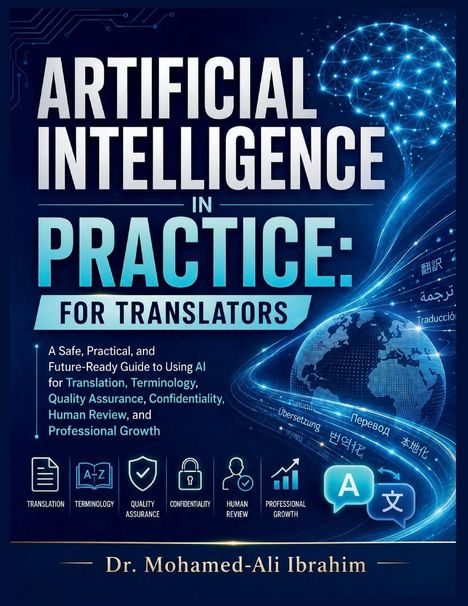
Mohamed-Ali Ibrahim: Artificial Intelligence in Practice, Kartoniert / Broschiert
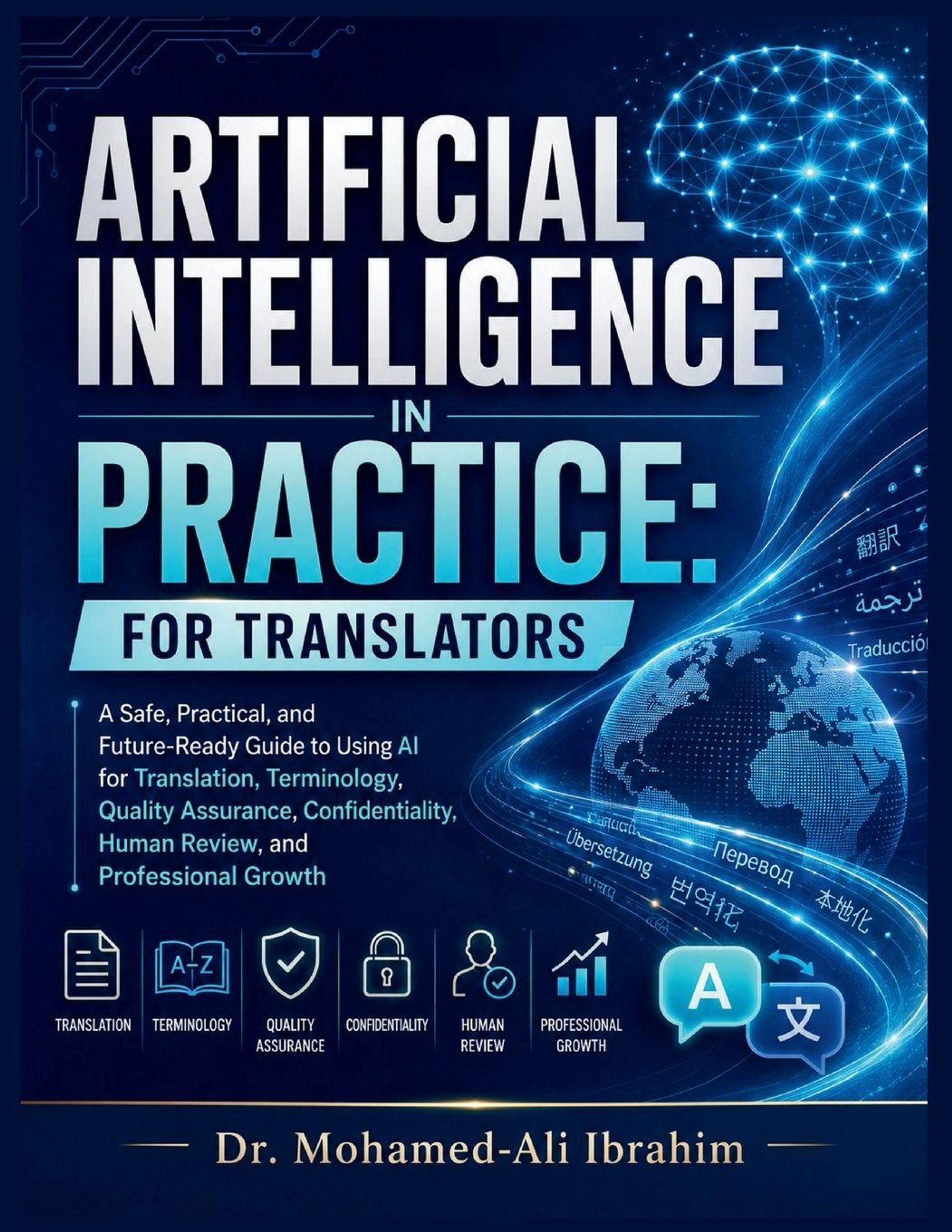
Artificial Intelligence in Practice
- For Translators: A Safe, Practical, and Future-Ready Guide to Using AI for Translation, Terminology, Quality Assurance, Confidentiality, Human Review, and Professional Growth
(soweit verfügbar beim Lieferanten)
- Verlag:
- DR.IBRAHIM, 08/2026
- Einband:
- Kartoniert / Broschiert
- Sprache:
- Englisch
- ISBN-13:
- 9783852283180
- Artikelnummer:
- 12902235
- Umfang:
- 98 Seiten
- Gewicht:
- 271 g
- Maße:
- 280 x 216 mm
- Stärke:
- 6 mm
- Erscheinungstermin:
- 7.8.2026
- Hinweis
-
Achtung: Artikel ist nicht in deutscher Sprache!
Weitere Ausgaben von Artificial Intelligence in Practice |
Preis |
|---|---|
| Buch, Kartoniert / Broschiert, Englisch | EUR 97,24* |
| Buch, Kartoniert / Broschiert, Englisch | EUR 90,05* |
| Buch, Kartoniert / Broschiert, Englisch | EUR 90,05* |
| Buch, Kartoniert / Broschiert, Englisch | EUR 90,05* |
| Buch, Kartoniert / Broschiert, Englisch | EUR 90,05* |
| Buch, Kartoniert / Broschiert, Englisch | EUR 96,11* |
| Buch, Kartoniert / Broschiert, Englisch | EUR 95,10* |
| Buch, Kartoniert / Broschiert, Englisch | EUR 89,68* |
| Buch, Kartoniert / Broschiert, Englisch | EUR 94,47* |
| Buch, Kartoniert / Broschiert, Englisch | EUR 94,59* |
| Buch, Kartoniert / Broschiert, Englisch | EUR 96,48* |
| Buch, Kartoniert / Broschiert, Englisch | EUR 94,97* |
Klappentext
Artificial Intelligence in Practice: For Translators A Safe, Practical, and Future-Ready Guide to Using AI for Translation, Terminology, Quality Assurance, Confidentiality, Human Review, and Professional Growth Introduction Artificial intelligence is rapidly changing the translation profession. Machine translation, CAT tools, terminology systems, generative AI, quality-assurance applications, localisation platforms, and intelligent search tools are becoming part of everyday language work. These technologies can help translators analyse source texts, organise terminology, prepare glossaries, identify inconsistencies, support post-editing, create review checklists, draft client queries, and improve workflow efficiency. But speed is not the same as quality. A translation can sound fluent while containing an incorrect term, a missing condition, a changed number, an unsupported addition, a weakened warning, or a serious shift in meaning. Artificial Intelligence in Practice: For Translators is a practical, professional, and future-ready guide for language professionals who want to use AI while protecting linguistic accuracy, confidentiality, cultural understanding, professional independence, and human responsibility. This book takes readers through the complete translation workflow-from project intake and source-text analysis to terminology, draft support, bilingual revision, post-editing, quality assurance, localisation, client communication, and final delivery. It also addresses some of the most important challenges facing translators today: confidential client material, AI hallucinations, terminology reliability, copyright and intellectual property, cultural suitability, high-risk content, client disclosure, data protection, and specialist human review. The central principle is simple: AI can support translation work, but the professional translator remains responsible for meaning, quality, confidentiality, and final human review. With translator-specific prompts, exercises, checklists, case studies, workflow tools, an AI Impact Dashboard, confidentiality controls, quality-assurance resources, and a structured six-week practice plan, this book provides a practical framework for introducing AI without surrendering professional judgement. Main Benefits of the Book Readers will learn how to: Use AI responsibly across different stages of the translation workflow. Analyse source texts for purpose, audience, tone, terminology, ambiguity, names, numbers, and risk. Extract and organise candidate terminology without treating AI suggestions as approved terms. Develop evidence-based terminology and glossary workflows. Use AI for controlled translation and drafting support where appropriate. Improve machine-translation post-editing and bilingual revision. Identify omissions, additions, meaning drift, terminology inconsistencies, and numerical differences. Check modality, negation, conditions, exceptions, names, dates, currencies, quantities, and units.