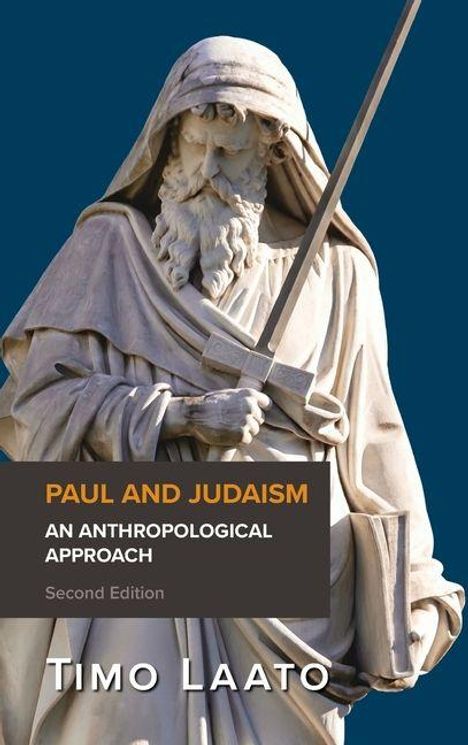
Timo Laato: Paul and Judaism, Gebunden
Paul and Judaism
- An Anthropological Approach
(soweit verfügbar beim Lieferanten)
- Verlag:
- Concordia Publishing House, 06/2026
- Einband:
- Gebunden
- Sprache:
- Englisch
- ISBN-13:
- 9780758682017
- Artikelnummer:
- 12696140
- Umfang:
- 282 Seiten
- Gewicht:
- 445 g
- Maße:
- 229 x 152 mm
- Stärke:
- 13 mm
- Erscheinungstermin:
- 16.6.2026
- Hinweis
-
Achtung: Artikel ist nicht in deutscher Sprache!
Klappentext
A leading contribution to Pauline scholarship, Paul and Judaism: An Anthropological Approach, Second Edition offers a fresh and rigorous reassessment of Paul's relationship to Judaism by focusing on a foundational but often overlooked question: What did Paul and his Jewish contemporaries assume about the human person? Written by Timo Laato, internationally recognized expert of Pauline theology, this revised edition moves beyond abstract debates about law and works. Instead, Laato traces how claims about human will, bondage to sin, and divine initiative shape Paul's theology-and mark a decisive break from Second Temple and Rabbinic Judaism. Drawing on Laato's influential work on Romans and biblical hermeneutics, the study engages covenantal nomism, the New Perspective on Paul, and key Jewish texts with clarity and precision. By reframing classic disputes through an anthropological lens, it illuminates where Paul stands in continuity with Judaism and where he articulates a radically distinct understanding of sin, grace, and salvation. Key FeaturesAn anthropological framework for understanding Paul's theology Careful comparison of Pauline texts with Tannaitic literature and the Dead Sea Scrolls Sustained engagement with E. P. Sanders and covenantal nomism Fresh analysis of synergism, justification, Torah observance, and election Clear guidance through the New Perspective on Paul and its critics
Essential reading for scholars, pastors, and students seeking a deeper understanding of Paul's theology of grace and the human condition.