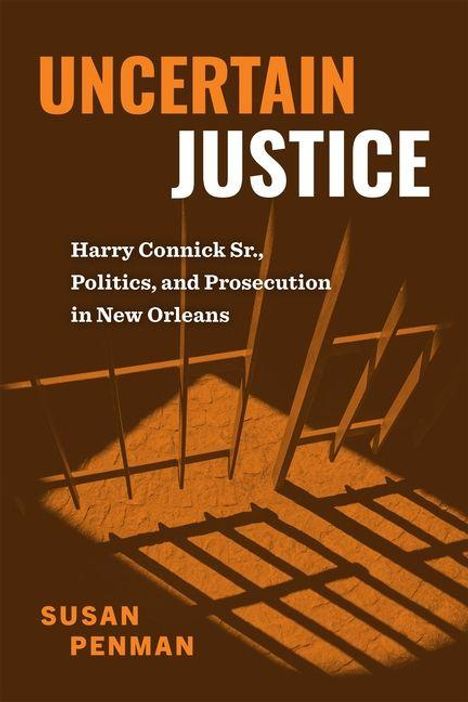
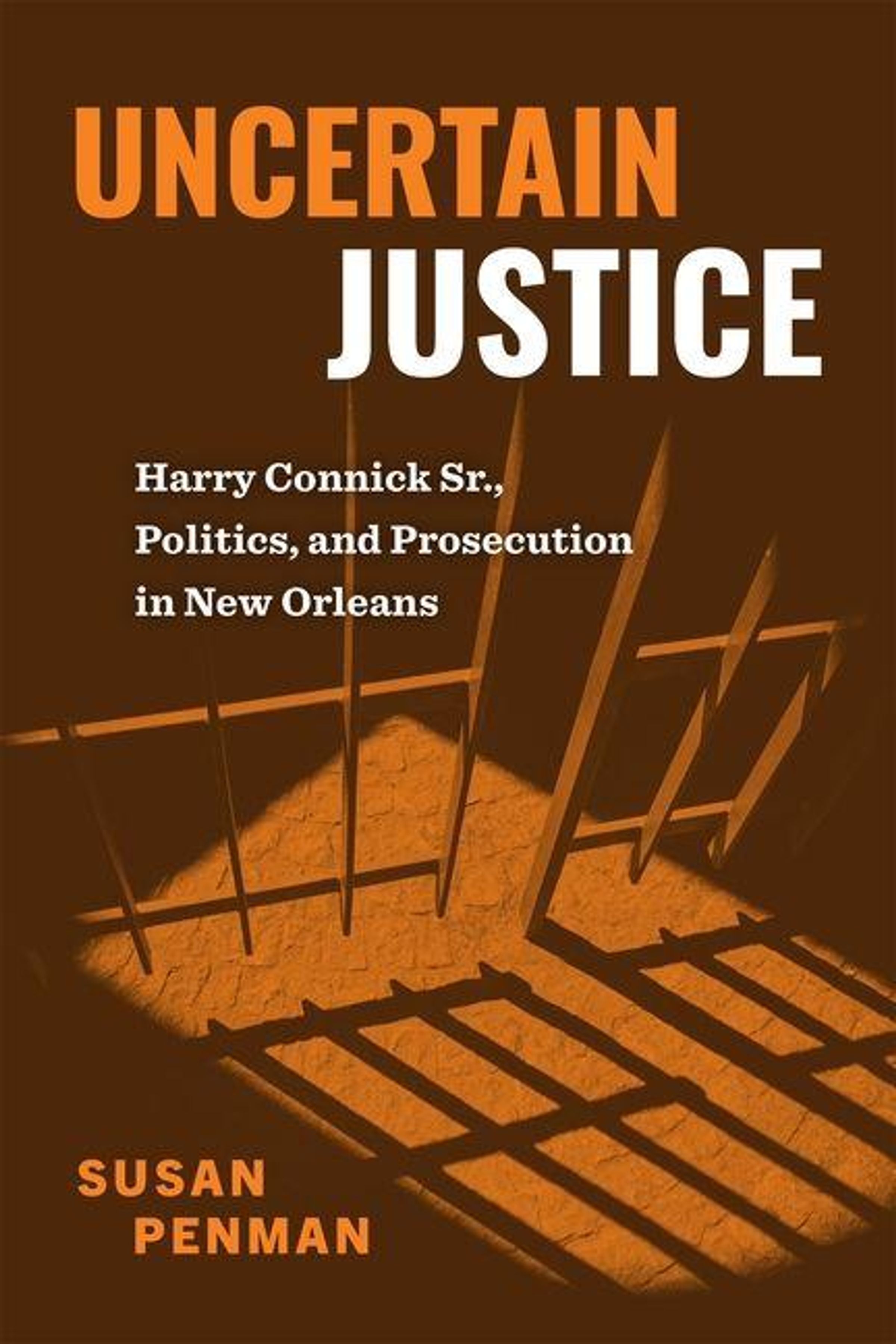
Susan Penman: Uncertain Justice, Gebunden
Uncertain Justice
- Harry Connick Sr., Politics, and Prosecution in New Orleans
Lassen Sie sich über unseren eCourier benachrichtigen, sobald das Produkt bestellt werden kann.
- Verlag:
- LSU Press, 02/2027
- Einband:
- Gebunden
- Sprache:
- Englisch
- ISBN-13:
- 9780807186978
- Umfang:
- 320 Seiten
- Gewicht:
- 599 g
- Maße:
- 229 x 152 mm
- Stärke:
- 22 mm
- Erscheinungstermin:
- 22.2.2027
- Hinweis
-
Achtung: Artikel ist nicht in deutscher Sprache!
Ähnliche Artikel


Klappentext
From 1974 to 2003, New Orleans had one man serve as its district attorney: Harry Connick Sr. That same time span marked a period of sharply rising incarceration rates and changing opinions about law and order, both locally and nationally. Louisiana in particular eventually gained the reputation of being the country's most incarcerated state; New Orleans, as its biggest city, bore much of the responsibility for earning it that designation. Connick was known for his tough-on-crime approach to prosecution, forcefully employing old and new legal strategies to send droves of defendants to jail and prison, often for as long as possible.
Connick was popular enough with voters to be re-elected four times, a long tenure that is particularly notable given the increase in Black political presence and power in New Orleans during that time. His multiple re-elections were evidence that enough of the city's Black voters supported his policies to keep him as DA, even when he faced spirited opposition from Black candidates who tried to show constituents how Connick had failed them. However, by the time of his retirement in 2003, Connick's reputation had begun to suffer as revelations of shocking prosecutorial misconduct in his office emerged. Over the past twenty years, those revelations have only increased in number and scope. Connick, now deceased, has left a fractured legacy whose reverberations continue to be felt in New Orleans.
Susan Penman's Uncertain Justice shows what Connick's office was like during the decades he was in power: how it was situated politically, what steps it took to curb crime at a time when so many New Orleanians were concerned about violence, and what locals perceived about how it functioned--and in turn how they either supported or questioned Connick's policies. Penman demonstrates the vast influence a district attorney possesses and how that influence manifests locally through legislation, office practices, and political sway. Uncertain Justice sits at the nexus of carceral studies and history by exploring how one man, at the helm of a very powerful office, navigated shifting political currents and exercised immense authority throughout many crucial years.