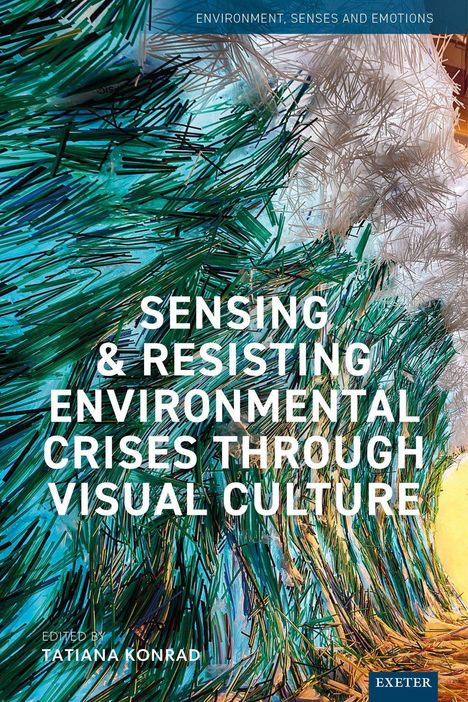
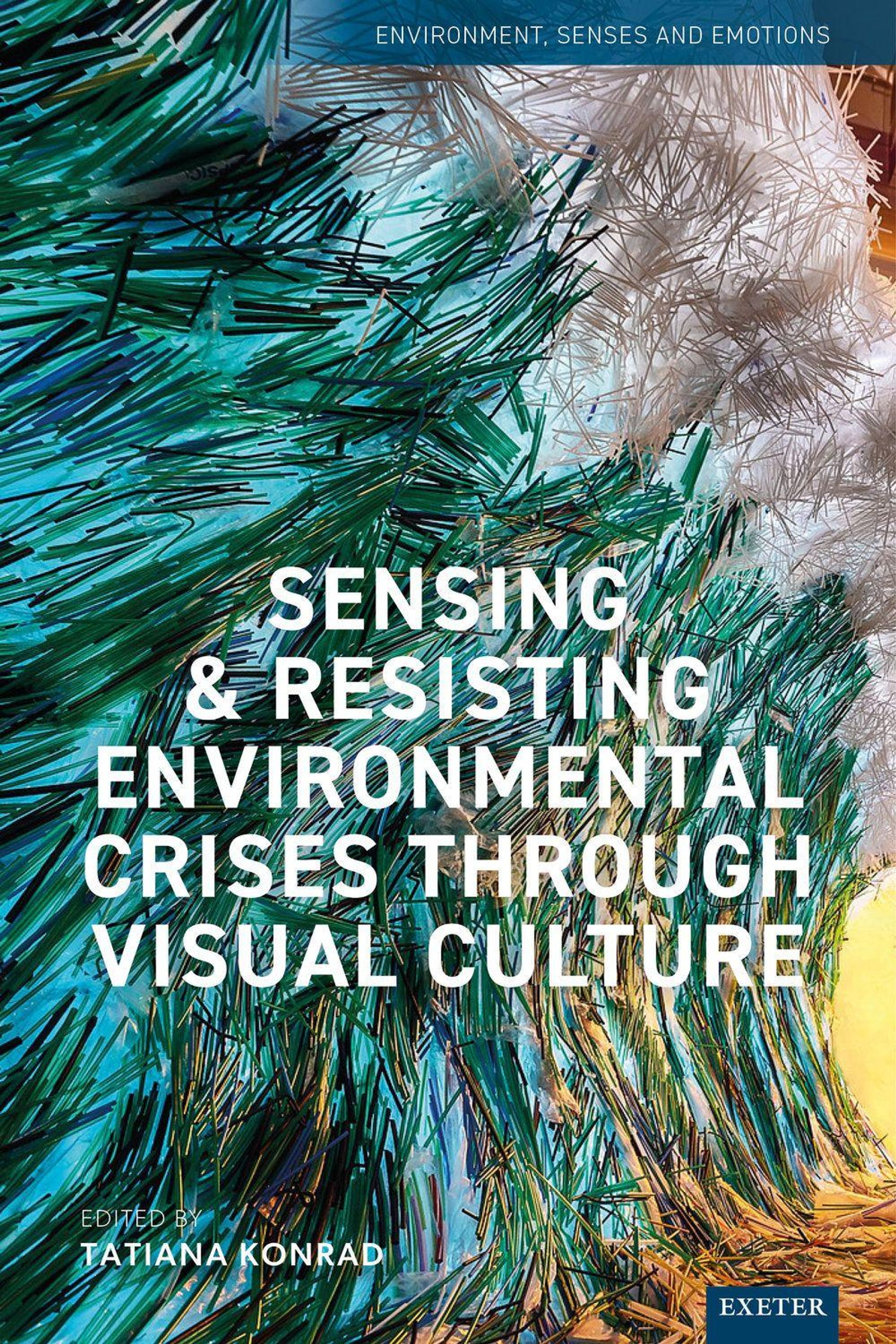
Sensing and Resisting Environmental Crises Through Visual Culture, Gebunden
Sensing and Resisting Environmental Crises Through Visual Culture
Sie können den Titel schon jetzt bestellen. Versand an Sie erfolgt gleich nach Verfügbarkeit.
- Herausgeber:
- Tatiana Konrad
- Verlag:
- University of Exeter Press, 11/2026
- Einband:
- Gebunden
- Sprache:
- Englisch
- ISBN-13:
- 9781804132890
- Artikelnummer:
- 12912830
- Umfang:
- 254 Seiten
- Gewicht:
- 536 g
- Maße:
- 234 x 156 mm
- Stärke:
- 18 mm
- Erscheinungstermin:
- 3.11.2026
- Hinweis
-
Achtung: Artikel ist nicht in deutscher Sprache!
Weitere Ausgaben von Sensing and Resisting Environmental Crises Through Visual Culture |
Preis |
|---|---|
| Buch, Kartoniert / Broschiert, Englisch | EUR 58,10* |
Klappentext
Sensing and Resisting Environmental Crises Through Visual Culture explores the role of the senses in perceiving and dealing with urgent environmental concerns. Situated at the crossroads of sensory studies, the environmental humanities, and visual culture studies, it makes a unique contribution to the ongoing research on environmental problems. Such a perspective on environmental crises through the humanities lens offers a complementary framework to the wider field of study, enriching the discourse through interdisciplinary scholarship.
While focusing on visual culture, the book insists that every sense-not just sight-is crucial for recognizing and responding to environmental harm. It considers how visual materials actively engage different senses to communicate environmental concerns and advocate for justice, and how emotions shape our perception of environmental crises, acting as a catalyst for resistance and social action. The chapters provide a global range of examples foregrounding environmental visual activism as a form of resistance and scholarly engagement, from images of pollution in Delhi, the Zambian Copperbelt, and Pueblo's Salt Creek, to the role of cartoons, eco-cinema, and science fiction video games in rendering environmental distress visible, to investigations into other-than-visual experiences, such as the politics of smell, and the use of sonic / haptic practices in Canadian media.
Deepening understandings of the unfolding environmental crises by emphasizing their sensory dimensions, the contributions reflect on how visual culture addresses the challenges posed by these crises, working toward restoration of environmental justice. This volume is essential reading for students and researchers in the environmental humanities, sensory studies, and visual culture studies.