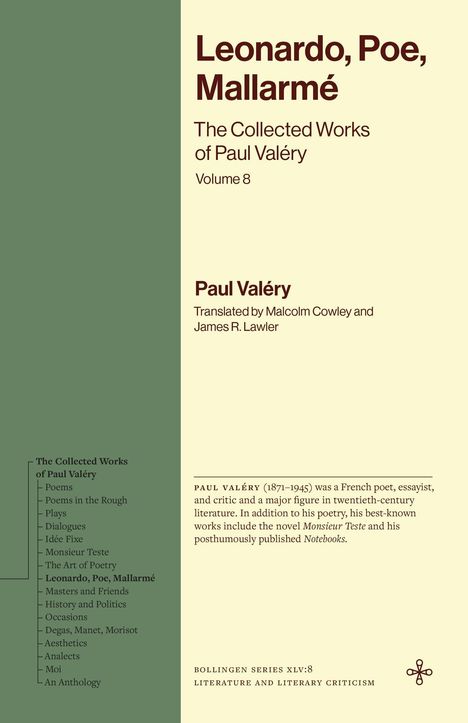
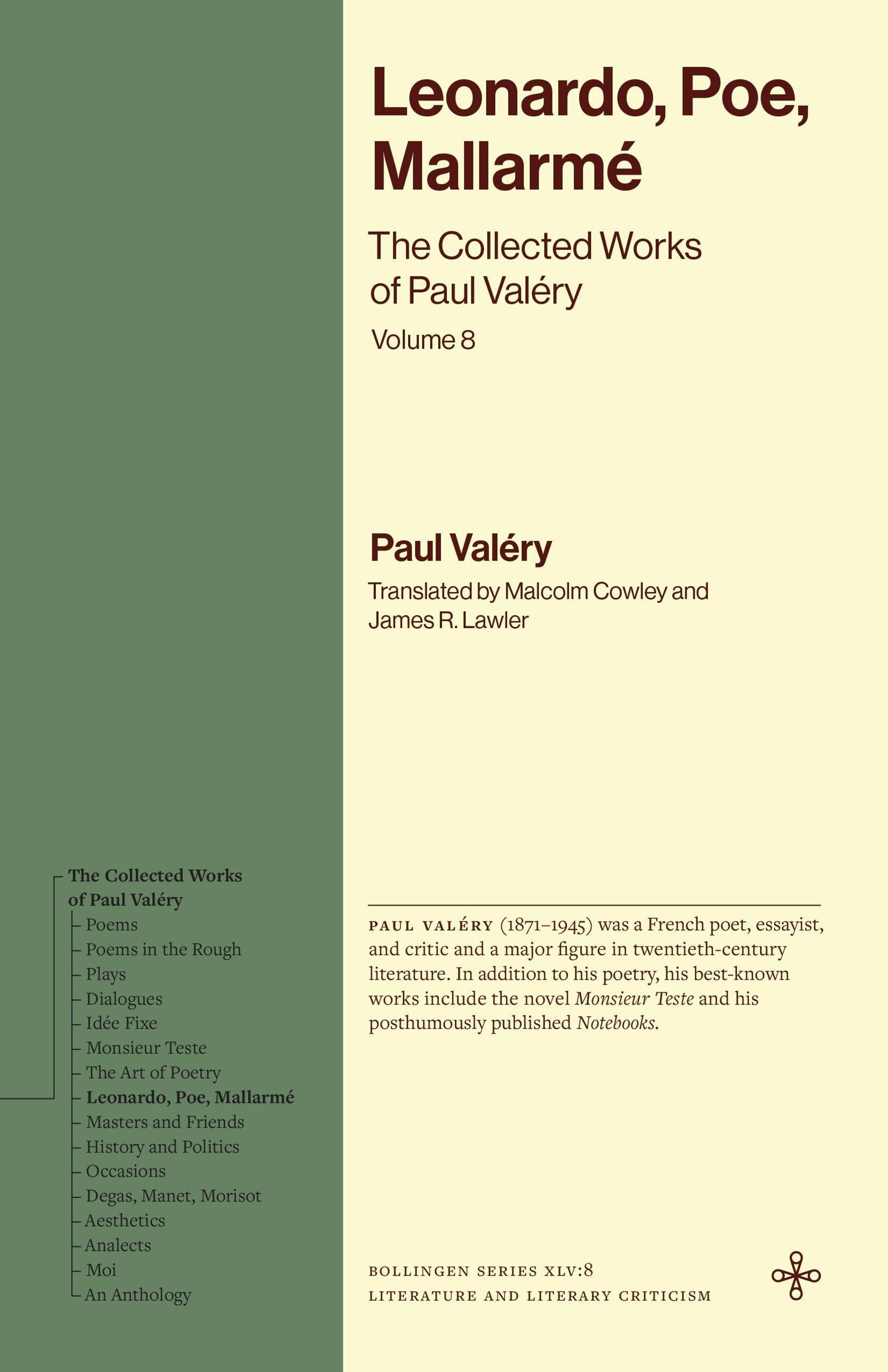
Paul Valery: Leonardo, Poe, Mallarme, Kartoniert / Broschiert
Leonardo, Poe, Mallarme
- The Collected Works of Paul Valery, Volume 8
Sie können den Titel schon jetzt bestellen. Versand an Sie erfolgt gleich nach Verfügbarkeit.
- Übersetzung:
- James R. Lawler, Malcolm Cowley
- Verlag:
- Princeton University Press, 09/2026
- Einband:
- Kartoniert / Broschiert
- Sprache:
- Englisch
- ISBN-13:
- 9780691292984
- Artikelnummer:
- 12696000
- Umfang:
- 480 Seiten
- Erscheinungstermin:
- 1.9.2026
- Serie:
- Bollingen Recollections
- Hinweis
-
Achtung: Artikel ist nicht in deutscher Sprache!
Weitere Ausgaben von Leonardo, Poe, Mallarme |
Preis |
|---|---|
| Buch, Gebunden, Englisch | EUR 73,39* |
Klappentext
A collection of Valéry's essays on three artists who were of central importance to him
Paul Valéry had an enduring fascination with Leonardo, Poe, and Mallarmé and his essays on these fellow artists are among his most important writings. This volume presents those essays along with extensive selections on these figures from Valéry's Notebooks . Valéry's Leonardo and Poe were almost pure invention. It was not so much their works as their minds that interested him---"the living and thinking systems that produced those works." In the essays on Mallarmé, Valéry was writing about a man he knew and loved, and a poet he greatly admired, but whose difference from himself he fully recognized.
The Collected Works of Paul Valéry, the first collected edition of the writer in English, features new translations, the original French on facing pages for poetic works, and editorial notes.