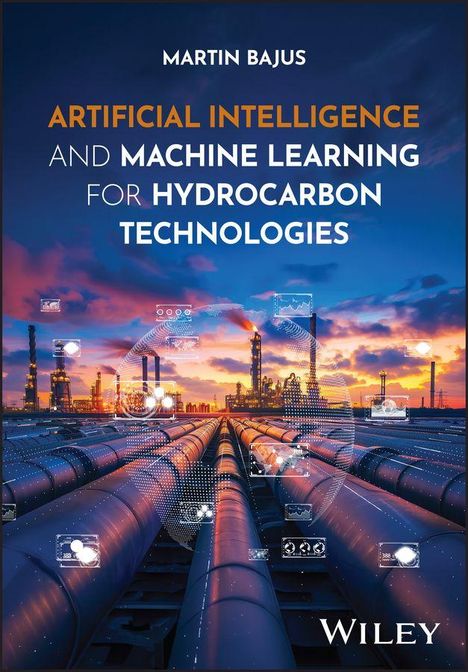
Martin Bajus: Artificial Intelligence and Machine Learning for Hydrocarbon Technologies, Gebunden
Artificial Intelligence and Machine Learning for Hydrocarbon Technologies
Lassen Sie sich über unseren eCourier benachrichtigen, sobald das Produkt bestellt werden kann.
- Verlag:
- John Wiley & Sons Inc, 02/2027
- Einband:
- Gebunden
- Sprache:
- Englisch
- ISBN-13:
- 9781394454341
- Umfang:
- 368 Seiten
- Erscheinungstermin:
- 25.2.2027
- Hinweis
-
Achtung: Artikel ist nicht in deutscher Sprache!
Ähnliche Artikel


Klappentext
Apply AI and machine learning across the hydrocarbon value chain
As refineries transition toward intelligent, low-carbon operations, engineers need integrated guidance on deploying AI across hydrocarbon processes. Artificial Intelligence and Machine Learning for Hydrocarbon Technologies, written by Martin Bajus, a petrochemistry authority with over five decades of academic and industrial experience, explains how AI techniques create tangible value by enhancing efficiency, enabling real-time decision-making, reducing energy consumption, and improving catalyst and materials discovery.
The book provides ready-to-use frameworks spanning modelling methods, thermodynamic analysis, catalyst screening, ML workflows, and digital transformation strategies. Coverage extends across the full hydrocarbon value chain, including refining, catalytic cracking, pyrolysis, sustainable aviation fuel, Power-to-X, energy systems, and CO conversion. Industrial case studies demonstrate practical implementation of AI-enabled refinery operations alongside systematic treatment of data, engineering design, and process workflows.
Readers will also find:
- Guidance on neural networks, physics-informed models, and machine learning-based process control applied to reactor simulation and predictive maintenance
- Frameworks for digital twins and autonomous operations that support data-driven optimization across refinery and petrochemical facilities
- Industrial case studies illustrating how AI-enabled operations reduce energy consumption while improving throughput and process reliability
- Systematic coverage of catalyst design and materials discovery accelerated through machine learning screening and thermodynamic analysis methods
- Strategies for decarbonization and digital transformation aligned with Industry 4.0 requirements for intelligent, low-carbon hydrocarbon processing
Designed for researchers and engineers applying AI and ML to chemical processes, refinery technologists pursuing process optimization, and professionals driving decarbonization and digital transformation, this reference equips practitioners to work at the intersection of chemical engineering and artificial intelligence. PhD students and industrial data scientists will also find it a valuable training resource.