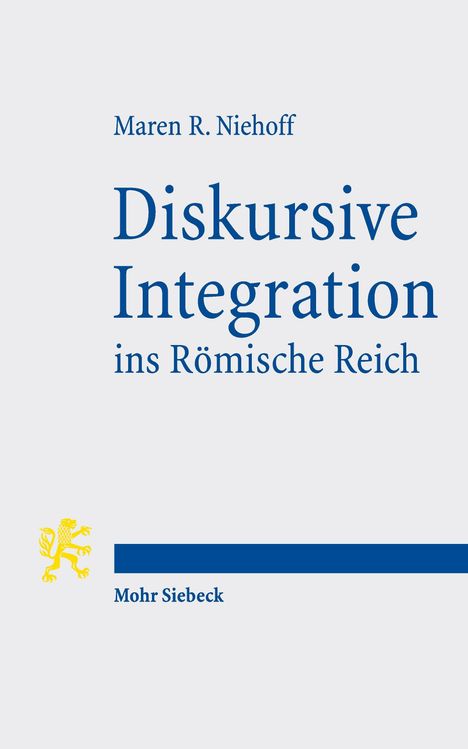
Maren R. Niehoff: Diskursive Integration ins Römische Reich, Kartoniert / Broschiert
Diskursive Integration ins Römische Reich
- Der Dekalog zwischen Juden, Christen und Griechen
Sie können den Titel schon jetzt bestellen. Versand an Sie erfolgt gleich nach Verfügbarkeit.
- Verlag:
- Mohr Siebeck GmbH & Co. K, 11/2026
- Einband:
- Kartoniert / Broschiert
- Sprache:
- Deutsch
- ISBN-13:
- 9783162006783
- Artikelnummer:
- 12923233
- Umfang:
- 250 Seiten
- Erscheinungstermin:
- 30.11.2026
- Serie:
- Tria Cordia
Klappentext
Maren R. Niehoff investigates how one of many biblical law collections became the Decalogue and came to stand for universal ethics. Roman legal discourses play a decisive role, as Jewish, Christian, and Greek authors each integrated their respective traditions through the Decalogue within the Roman Empire. The following stages of development emerge from a philological and historical analysis of the texts: In the Bible and during the Second Temple period, the Ten Commandments do not yet occupy a special position, neither in Hebrew-speaking nor in Greek-speaking Judaism. Philo of Alexandria breaks new ground in the first century, the first to devote a separate treatise to the Decalogue as a foundational ethical law, drawing inspiration from Roman legal manuals.
In the writings of the New Testament, which are examined here in chronological order, the universal significance of the Ten Commandments first appears in the Epistle to the Romans, which nuances the sharp critique of the Law found in Galatians. Paul combines faith in Christ with praise of the ruler and, like Seneca, advocates universal ethical norms in conjunction with the commandment to love. The Decalogue is also discernible in the Synoptic Gospels, which employ it in a Pauline manner.
Josephus and the rabbinic literature interpret the Decalogue as part of a process of differentiation from Christianity. Two hermeneutical focal points become apparent: the role of the priests in reciting the Decalogue in the Jerusalem Temple, and the response to the Christian appropriation of the Decalogue's universal commandments.
In Late Antiquity, Christian and pagan authors debate the Decalogue in relation to Judaism. Orthodox positions consolidate through recourse to the Decalogue, whereas heterodox authors marginalize it. Emperor Julian appeals to the Decalogue in a final attempt to unite the Roman Empire under universal values.
Anmerkungen:
Bitte beachten Sie, dass auch wir der Preisbindung unterliegen und kurzfristige Preiserhöhungen oder -senkungen an Sie weitergeben müssen.