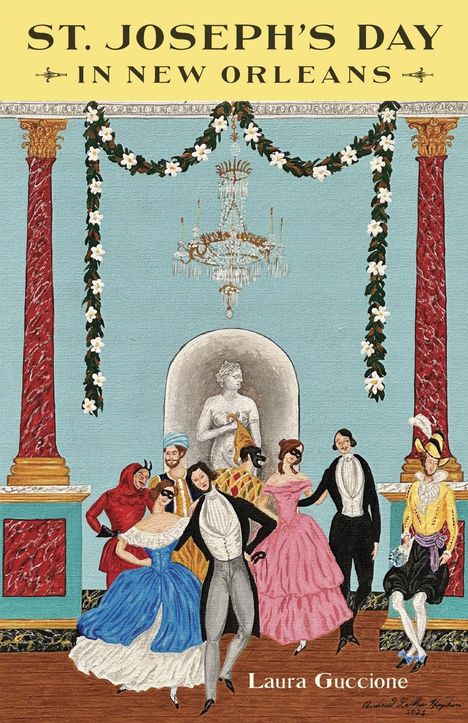
Laura Guccione: St. Joseph's Day in New Orleans, Gebunden
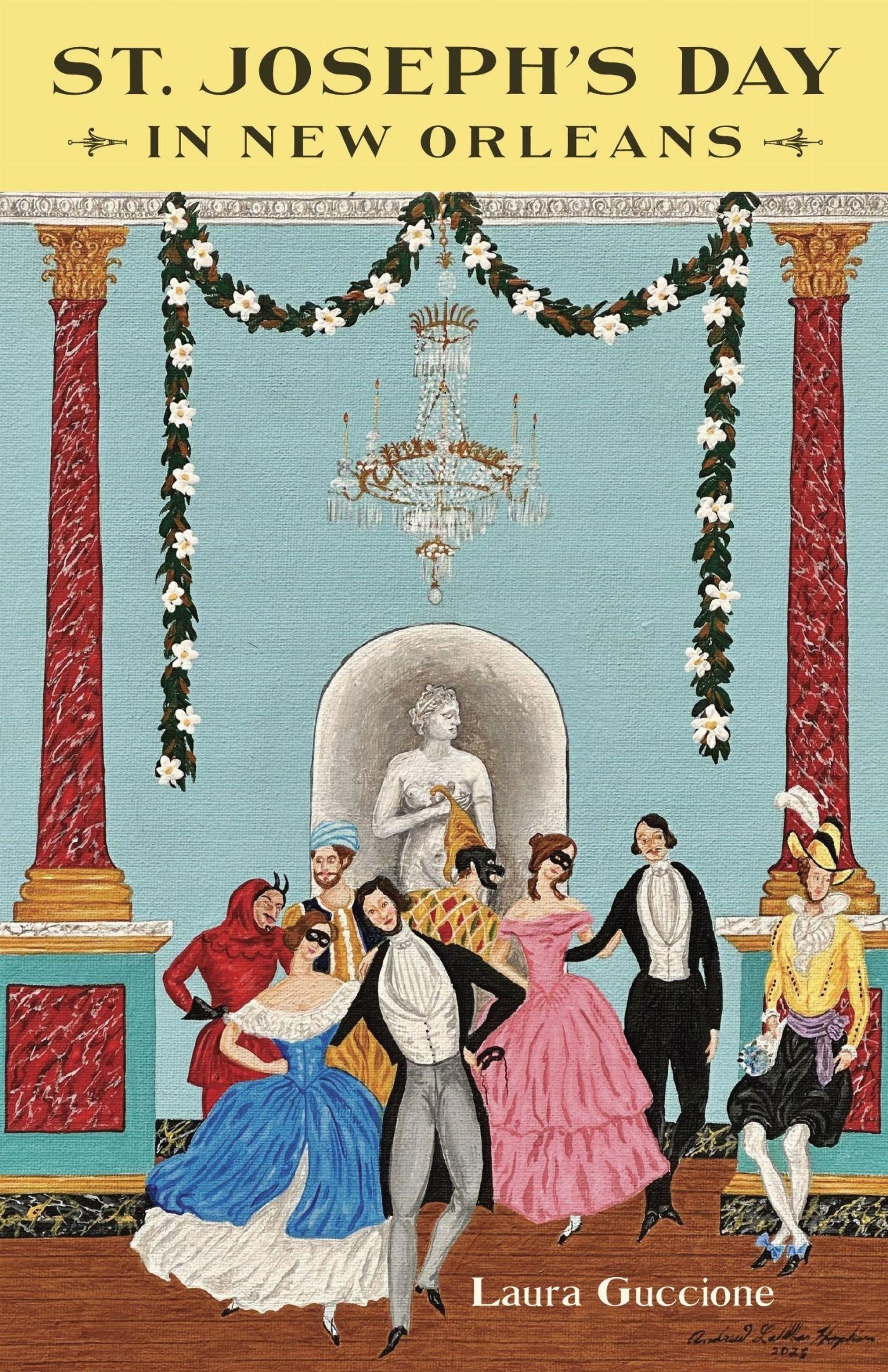
St. Joseph's Day in New Orleans
Lassen Sie sich über unseren eCourier benachrichtigen, sobald das Produkt bestellt werden kann.
- Verlag:
- LSU Press, 10/2026
- Einband:
- Gebunden
- Sprache:
- Englisch
- ISBN-13:
- 9780807186411
- Umfang:
- 200 Seiten
- Gewicht:
- 381 g
- Maße:
- 216 x 140 mm
- Stärke:
- 16 mm
- Erscheinungstermin:
- 22.10.2026
- Hinweis
-
Achtung: Artikel ist nicht in deutscher Sprache!
Ähnliche Artikel


Klappentext
St. Joseph's Day in New Orleans investigates the origins and evolution of the St. Joseph's Day holiday, revealing its deep connection to the mid-Lent celebration known as Mi-Carême. Initially conceived as a welcome break from Lent's austerity, mid-Lent featured masked balls, dancing, and exuberant public revelry---traditions later associated solely with Mardi Gras. Through a meticulous review of historic newspaper accounts, archival resources, and city records, Laura Guccione shows that, in New Orleans, St. Joseph's Day and mid-Lent were not separate observances but two names for the same festive occasion. In the city's early and antebellum years, this holiday was a communitywide, inclusive event open to a broad cross section of residents.
After the Civil War and Reconstruction, these holidays changed, with celebrations shifting from public gatherings to private, exclusive balls. As Mardi Gras grew larger and more spectacular, gained cultural importance, and changed shape in response to an increasing Anglo-American influence, St. Joseph's Day lost some of its prominence. Still, the holiday persisted as a more scattered, ethnically rooted tradition, gaining new meaning for groups whose histories have often been overlooked in mainstream narratives of New Orleans culture.
The participation of Black masking Indians, who have long taken to the streets on St. Joseph's Night, can be traced to the holiday's mid-Lent origins. Their celebrations are a form of cultural resistance, emphasizing visibility and pride in a city where Black contributions are often overlooked. The Baby Dolls and other culture bearers also contributed to this intricate mix of street performance and celebration over the long history of St. Joseph's Day.
Sicilian immigrants in New Orleans, who connected the holiday to the feast day of Sicily's patron saint, also played a major role in adapting and reshaping St. Joseph's Day. Through the building of elaborate St. Joseph's altars---traditions brought from Sicily to New Orleans---they found a meaningful way to place themselves within the city's cultural scene. Although St. Joseph's Day is often seen as a shared celebration between Black masking Indians and Sicilian Americans, Guccione argues that the two groups interpret the day differently: One sees it as part of mid-Lent, while the other views it as a sacred feast day. Despite these differences, both groups have historically used St. Joseph's Day as a platform to assert identity, cultural resistance, and community pride.