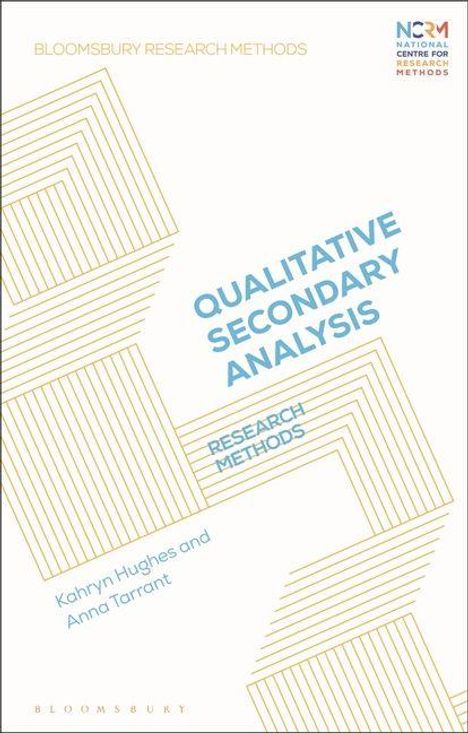
Kahryn Hughes: Doing Qualitative Secondary Analysis, Gebunden
Doing Qualitative Secondary Analysis
- Research Methods
Sie können den Titel schon jetzt bestellen. Versand an Sie erfolgt gleich nach Verfügbarkeit.
- Verlag:
- Bloomsbury Publishing PLC, 02/2027
- Einband:
- Gebunden
- Sprache:
- Englisch
- ISBN-13:
- 9781350415508
- Artikelnummer:
- 12717345
- Umfang:
- 144 Seiten
- Gewicht:
- 454 g
- Maße:
- 216 x 135 mm
- Stärke:
- 25 mm
- Erscheinungstermin:
- 18.2.2027
- Serie:
- Bloomsbury Research Methods
- Hinweis
-
Achtung: Artikel ist nicht in deutscher Sprache!
Weitere Ausgaben von Doing Qualitative Secondary Analysis |
Preis |
|---|---|
| Buch, Kartoniert / Broschiert, Englisch | EUR 24,47* |
Klappentext
Designed as a flagship, accessible text that introduces the field of Qualitative Secondary Analysis as it has developed in the past 25 years, the book details how, why and when the range of associated methods would be used and for what advantages for existing knowledge production.
Qualitative Secondary Analysis (QSA) is introduced not as a replacement for primary research, but as an established alternative or addition to the broader repertoire of qualitative research methods. Based on advanced methods training delivered by the authors for the National Centre for Research Methods, and consolidating their existing corpus of work on QSA, the main aim of the book is to address common questions that we receive, including: Should we do QSA, when and why? How do we do QSA? What data are there for QSA and how can we sample from existing datasets? What are the main ethical challenges of doing QSA?
This book maps out these challenges and provides researchers with clear guidance on how to make best use of the opportunities for new research offered through QSA. Providing an overview of existing debate and more recent innovations in QSA, they introduce and explain the broad range of methods that can be used to design robust QSA studies, clarifying each of these in terms of their various purposes and defining challenges. Finally, they provide a clear set of analytical strategies that can be used for research using existing qualitative data, which can also be used and applied in primary qualitative research.
Through the range of chapters and use of clear examples, this book covers questions from design to analysis to support researchers in using existing data in robust and rigorous research to address contemporary questions and concerns.