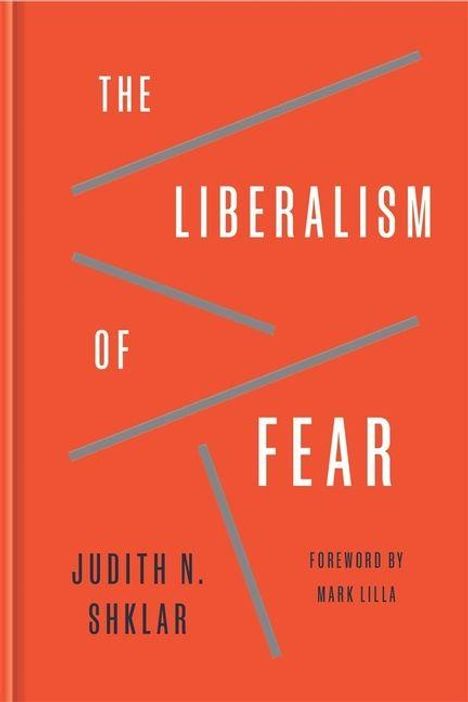
Judith Nisse Shklar: The Liberalism of Fear, Gebunden
The Liberalism of Fear
Sie können den Titel schon jetzt bestellen. Versand an Sie erfolgt gleich nach Verfügbarkeit.
- Verlag:
- Harvard University Press, 10/2026
- Einband:
- Gebunden
- Sprache:
- Englisch
- ISBN-13:
- 9780674306639
- Artikelnummer:
- 12590800
- Umfang:
- 80 Seiten
- Gewicht:
- 130 g
- Maße:
- 152 x 102 mm
- Stärke:
- 6 mm
- Erscheinungstermin:
- 30.10.2026
- Hinweis
-
Achtung: Artikel ist nicht in deutscher Sprache!
Klappentext
Available for the first time in a stand-alone volume, the classic essay that envisions liberalism not as the triumphant endpoint of political progress, or even a cohesive ideology, but rather as a precarious guardrail against abuses of power.
After the collapse of the Soviet Union, many hailed the supposed triumph of liberal democracy as the "end of history." But Judith Shklar offers a sober and cautionary perspective. Far from an inevitable or permanent political order, liberalism was as fragile as it was essential: always threatened by the abusive political forces against which it offered imperfect but necessary defense. Shklar's vision of a bulwark in the face of cruelty, rather than a venerable ideology of freedom or individual autonomy, powerfully rejects conceptions of liberalism that were easy targets of critique from both left and right.
With its focus on the thin line dividing our political system from authoritarianism, The Liberalism of Fear is as relevant today as it was on its initial publication. Democratic institutions, from the courts to the ballot, are under attack from within, and marginalized groups are even more vulnerable to state-sanctioned violence. Now as before, our faith in the liberal order seems to be fueled above all by a fear of the alternatives. This is as it should be, according to Shklar: properly conceived, liberalism is a means of survival, not the road to utopia.
A new foreword by Mark Lilla places this classic study in its historical context and solidifies its importance during a precarious moment. A perfect entryway into Shklar's large and influential body of work, The Liberalism of Fear is both an essential addition to any scholar's library and a powerful note of warning.