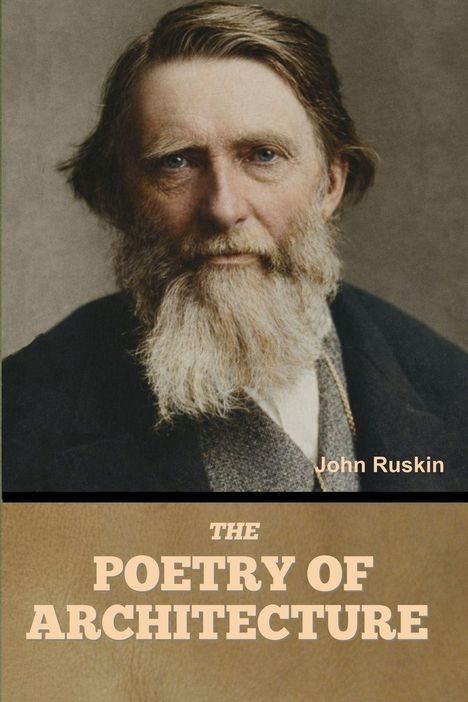
John Ruskin: The Poetry of Architecture, Kartoniert / Broschiert
The Poetry of Architecture
(soweit verfügbar beim Lieferanten)
- Verlag:
- IndoEuropeanPublishing.com, 02/2026
- Einband:
- Kartoniert / Broschiert
- Sprache:
- Englisch
- ISBN-13:
- 9798889425847
- Artikelnummer:
- 12633625
- Umfang:
- 122 Seiten
- Gewicht:
- 211 g
- Maße:
- 229 x 152 mm
- Stärke:
- 8 mm
- Erscheinungstermin:
- 21.2.2026
- Hinweis
-
Achtung: Artikel ist nicht in deutscher Sprache!
Klappentext
The Poetry of Architecture by John Ruskin is an early collection of essays that explores the relationship between architecture, nature, and moral character. The work reveals his deep belief that buildings should reflect harmony with their surroundings. Rather than viewing architecture as merely functional or decorative, Ruskin argues that it possesses a poetic quality when it truthfully expresses the spirit of the people and the landscape in which it stands. He closely examines rural cottages and villas across Europe, praising designs that grow naturally out of their environments.
A central theme of the essays is the idea that architecture carries moral significance. Ruskin insists that honesty in materials and construction is essential to beautiful design. He criticizes artificial ornamentation and imitation because they conceal the true nature of a building. For Ruskin, a simple cottage built with local stone and suited to its climate demonstrates integrity and humility, while overly ornate or industrially produced buildings reflect vanity and moral decline. This connection between architectural style and ethical values becomes one of the defining principles of his later work.
Although The Poetry of Architecture was an early publication, it laid the foundation for Ruskin's future influence on architectural theory and social thought. His ideas about truth, craftsmanship, and the importance of nature would later shape works such as The Seven Lamps of Architecture and The Stones of Venice. More broadly, his writings inspired reform movements that valued traditional craftsmanship over industrial mass production. In this way, The Poetry of Architecture is not only a study of buildings but also a reflection on how art, society, and morality are deeply interconnected.
About the Author
John Ruskin (1819-1900) was a leading English art critic, writer, and social thinker of the Victorian era. Born in London to a prosperous wine merchant, Ruskin was educated privately and later attended the University of Oxford. From an early age he showed a deep appreciation for art and nature, interests that would shape his life's work. His eloquent prose and passionate beliefs made him one of the most influential cultural figures of the nineteenth century.
Ruskin first gained widespread recognition with the publication of Modern Painters (1843-1860), a multi-volume work in which he defended the painter J. M.W. Turner and argued that artists should remain faithful to nature. He believed that art should express truth and moral purpose rather than merely imitate classical traditions. His ideas challenged established academic standards and helped elevate landscape painting to greater prominence in Britain. Ruskin's criticism combined detailed observation with broader reflections on beauty, imagination, and spirituality.
Beyond art criticism, Ruskin became an outspoken social critic. In works such as Unto This Last (1860) and Sesame and Lilies (1865), he attacked industrial capitalism and argued that economic systems should prioritize human well-being over profit. He was deeply troubled by the social inequalities and environmental damage brought about by industrialization. His social philosophy influenced later reformers, including Mahatma Gandhi, and contributed to movements advocating for social justice and improved working conditions. ....