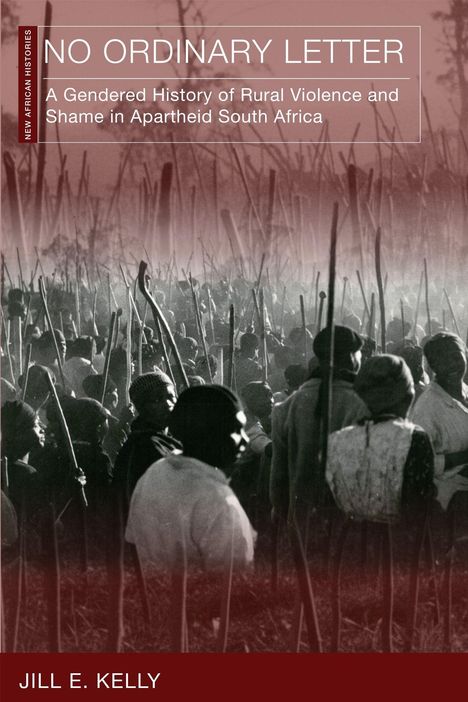
Jill E. Kelly: No Ordinary Letter, Kartoniert / Broschiert
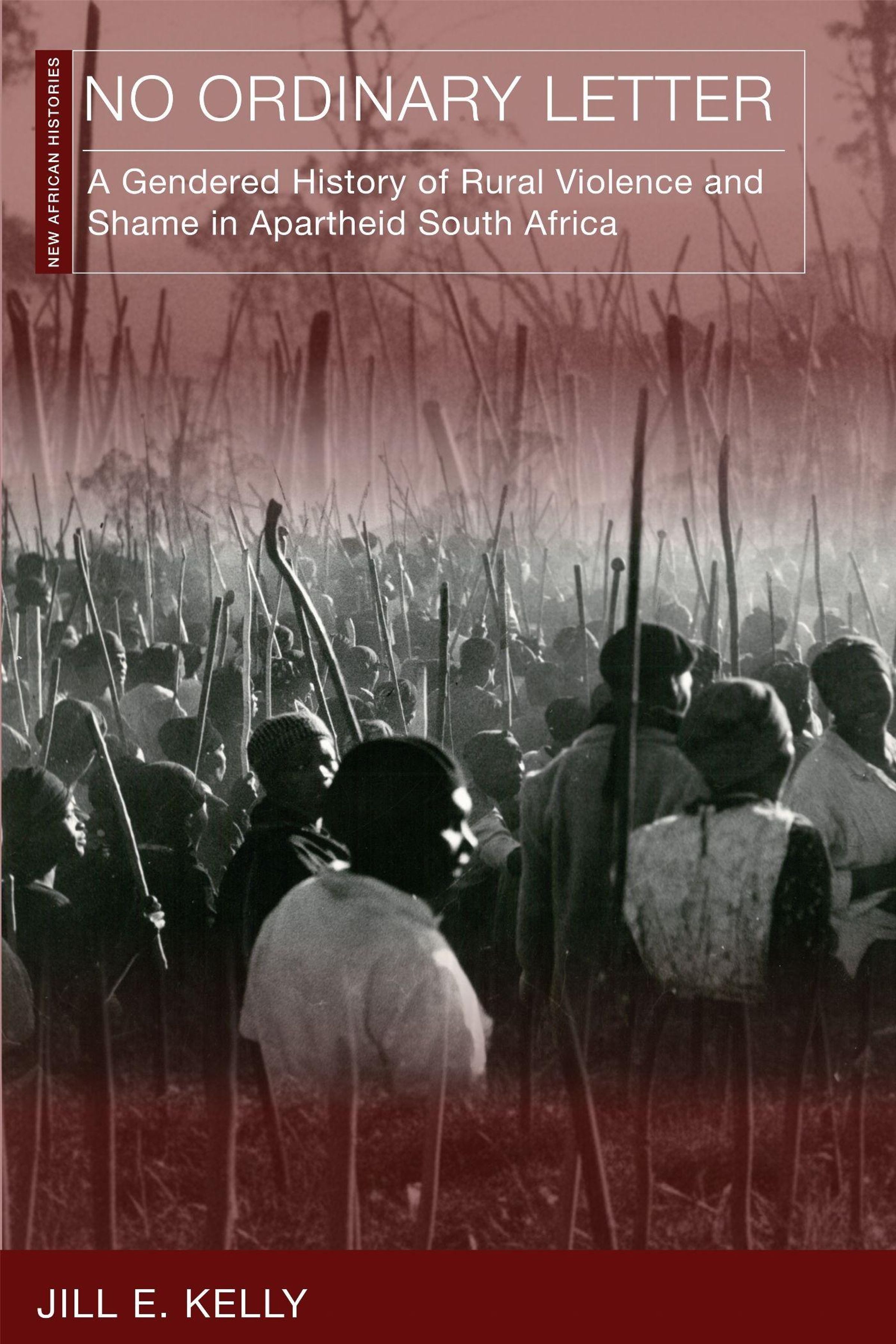
No Ordinary Letter
- A Gendered History of Rural Violence and Shame in Apartheid South Africa
Sie können den Titel schon jetzt bestellen. Versand an Sie erfolgt gleich nach Verfügbarkeit.
- Verlag:
- Ohio University Press, 11/2026
- Einband:
- Kartoniert / Broschiert
- Sprache:
- Englisch
- ISBN-13:
- 9780821427255
- Artikelnummer:
- 12674023
- Umfang:
- 272 Seiten
- Erscheinungstermin:
- 10.11.2026
- Serie:
- New African Histories
- Hinweis
-
Achtung: Artikel ist nicht in deutscher Sprache!
Weitere Ausgaben von No Ordinary Letter |
Preis |
|---|---|
| Buch, Gebunden, Englisch | EUR 150,15* |
Klappentext
No Ordinary Letter reconstructs the intellectual world of rural South African women who, in 1959, mounted determined campaigns across Natal to resist the expanding policies of apartheid. Challenging Bantu Authorities, detrimental agricultural schemes, restrictions on movement, and the extension of pass laws to women, these organizers drew on knowledge rooted in the lived experience of farmwork, household management, and community governance. The book shows how women assessed their political circumstances and crafted strategies-some peaceful, some destructive-to make themselves heard in a system structured to ignore them.
Foregrounding women as thinkers as well as activists, No Ordinary Letter reveals how rural organizers theorized their positions under apartheid law and within patriarchal households and communities. Their repertoire of political understanding encompassed the daily violence of apartheid, local cultures of honor that enabled them to shame others into action, and finely honed skills for navigating the authority of elders, in‑laws, and traditional leaders. When the Camperdown Native Commissioner asked why a group had destroyed government property, they replied, "We were really writing a letter to the authorities which they could read. If we had written an ordinary letter, you would not have replied." Their explanation captures how an underlying logic of violence became a vehicle for extraordinary political communication.
At the same time, the book underscores the profound constraints shaping women's choices: poverty, state repression, and the multiple patriarchies embedded within both the apartheid state and African communities. These overlapping systems meant that the immediate enforcers of apartheid policy were often African men with their own stakes in patriarchal arrangements. No Ordinary Letter offers a groundbreaking account of how rural women understood, navigated, and contested these entangled structures of power, providing a fresh view on political thought and resistance in apartheid South Africa.