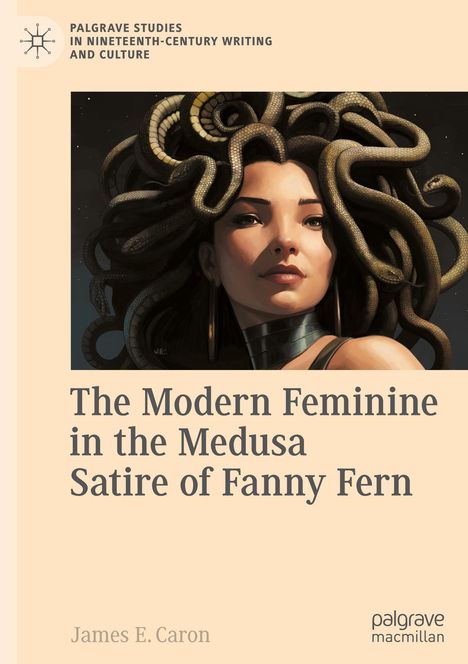
James E. Caron: The Modern Feminine in the Medusa Satire of Fanny Fern, Gebunden
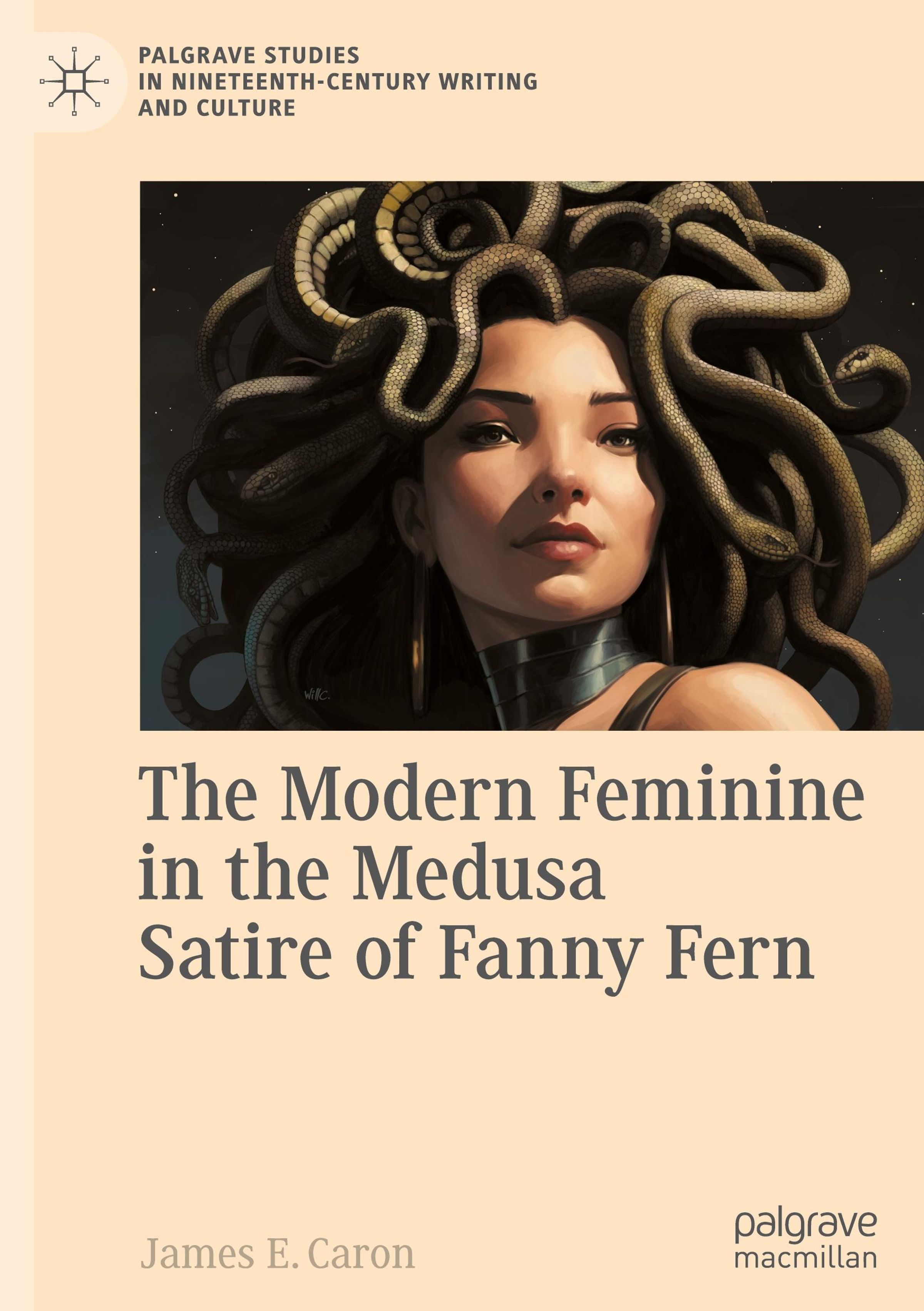
The Modern Feminine in the Medusa Satire of Fanny Fern
(soweit verfügbar beim Lieferanten)
- Verlag:
- Springer, 01/2024
- Einband:
- Gebunden, HC runder Rücken kaschiert
- Sprache:
- Englisch
- ISBN-13:
- 9783031412752
- Artikelnummer:
- 11724718
- Umfang:
- 232 Seiten
- Gewicht:
- 418 g
- Maße:
- 216 x 153 mm
- Stärke:
- 18 mm
- Erscheinungstermin:
- 3.1.2024
- Serie:
- Palgrave Studies in Nineteenth-Century Writing and Culture
- Hinweis
-
Achtung: Artikel ist nicht in deutscher Sprache!
Weitere Ausgaben von The Modern Feminine in the Medusa Satire of Fanny Fern |
Preis |
|---|
Klappentext
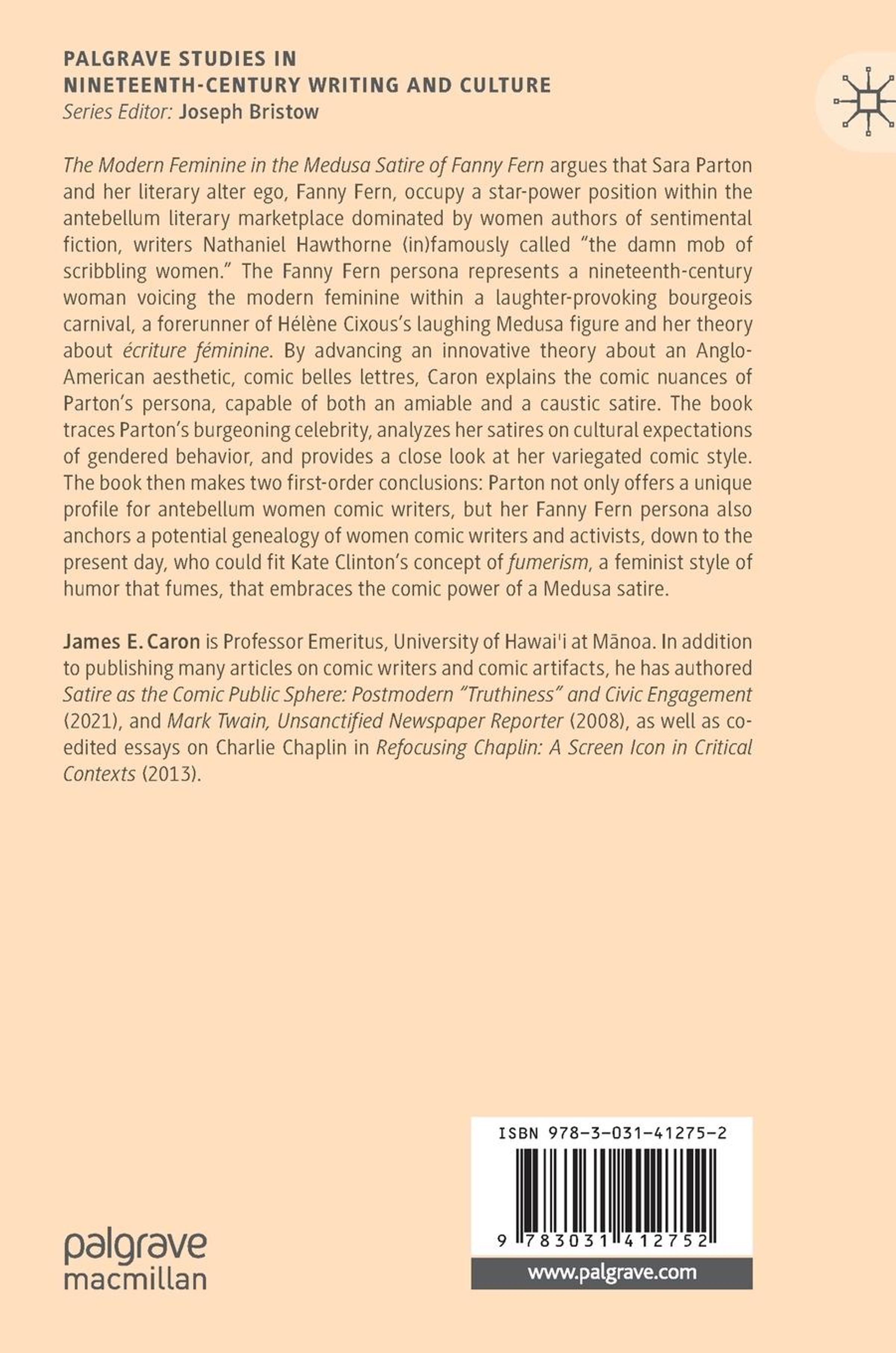
The Modern Feminine in the Medusa Satire of Fanny Fern argues that Sara Parton and her literary alter ego, Fanny Fern, occupy a star-power position within the antebellum literary marketplace dominated by women authors of sentimental fiction, writers Nathaniel Hawthorne (in)famously called the damn mob of scribbling women. The Fanny Fern persona represents a nineteenth-century woman voicing the modern feminine within a laughter-provoking bourgeois carnival, a forerunner of Hélène Cixouss laughing Medusa figure and her theory about écriture féminine. By advancing an innovative theory about an Anglo-American aesthetic, comic belles lettres, Caron explains the comic nuances of Partons persona, capable of both an amiable and a caustic satire. The book traces Partons burgeoning celebrity, analyzes her satires on cultural expectations of gendered behavior, and provides a close look at her variegated comic style. The book then makes two first-order conclusions: Parton not only offers a unique profile for antebellum women comic writers, but her Fanny Fern persona also anchors a potential genealogy of women comic writers and activists, down to the present day, who could fit Kate Clintons concept of fumerism, a feminist style of humor that fumes, that embraces the comic power of a Medusa satire.