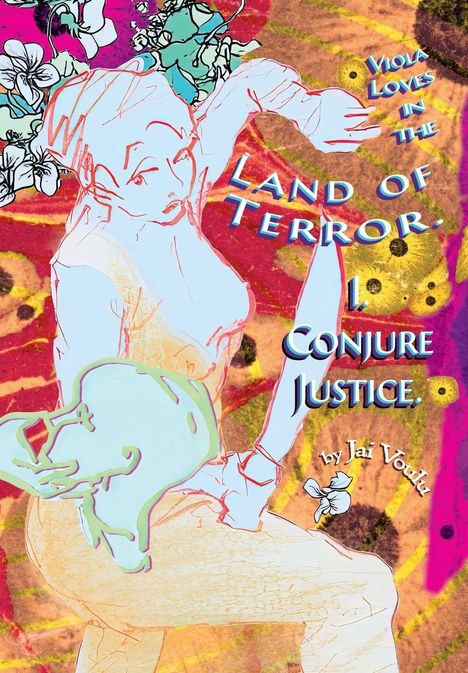
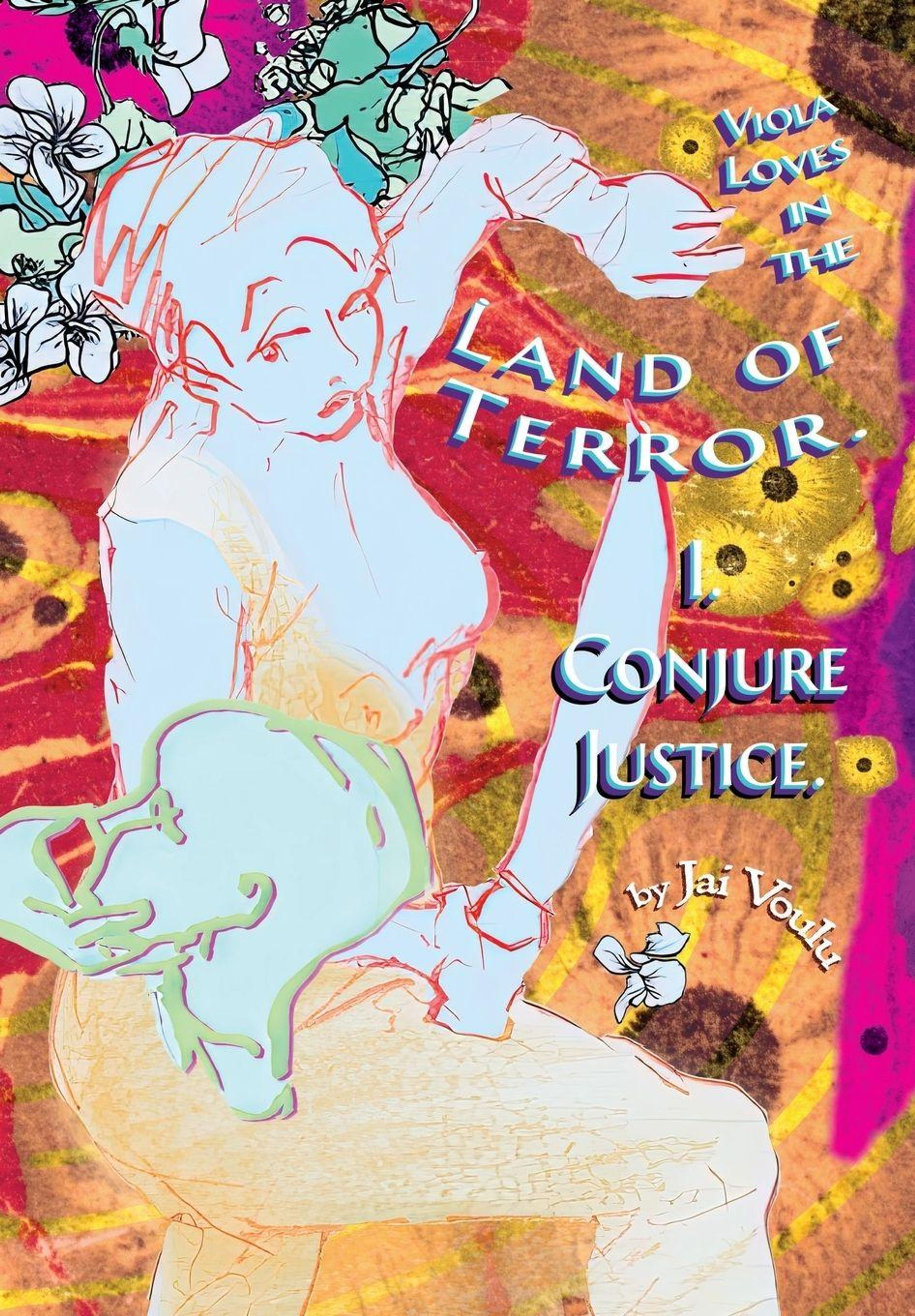
Jai Voulu: Viola Loves in the Land of Terror, Gebunden
Viola Loves in the Land of Terror
- Novella I, Conjure Justice
(soweit verfügbar beim Lieferanten)
- Verlag:
- Revif.com, 01/2026
- Einband:
- Gebunden
- Sprache:
- Englisch
- ISBN-13:
- 9781737252603
- Artikelnummer:
- 12559804
- Umfang:
- 462 Seiten
- Ausgabe:
- January 6, 2026 edition
- Gewicht:
- 1002 g
- Maße:
- 229 x 152 mm
- Stärke:
- 35 mm
- Erscheinungstermin:
- 6.1.2026
- Hinweis
-
Achtung: Artikel ist nicht in deutscher Sprache!
Klappentext
You and I voyage to the Land of Terror. From our everyday lives of routine pleasure and chores, we find ourselves surprised, struggling against demons of lawless tyranny. Together, what will we do? How may we overcome our supremist oppressors? What world shall we recreate over their ruins? Consider the true history of Viola Parr.
Viola Loves in the Land of Terror. Conjure Justice. Twenty-one books will present the world of Viola Parr, an Athenian woman of Dixie. She died of criminal abortion, March 1, 1919. Her deathbed confession stopped a new reign of State-sanctioned terror before it could begin. The series tells, firsthand, how we actually experience Viola's life, death, and legacy: The idealistic, but alienated osteopath Dr. William G. Waters performed the abortion at the behest of Viola's lover, Dr. Maxwell T. Summerlin. His peers called him M. T. His life was not empty, he was married, and a father, prominent social leader, and Viola's employer. Viola loved her boss, Maxie. Both Summerlin and Waters were convicted of homicide. Judge Andrew J. Cobb, former Justice of the Georgia Supreme Court, presided over the trial. In 1905, Justice Cobb had established the precedent for the right to privacy. The case was brought by the celebrated fresco painter Paolo Pavisich. He complained, "I am an ARTIST. Without privacy, I am but a slave." Since 1893, slavery had been re-engineered as peonage. Georgia's militias concerned themselves with the subjugation of Afro-Americans. Summerlin was commander of the most influential, secret, regional militia. Afro-American men were prevented from voting after 1903 by legislation and sex-based, systemic terror. Terror campaigns lynched Afro-American men as alleged sex-criminals. By 1919, Euro-Americans feared women's suffrage, believing that Afro-American women would dominate the polls unless a new form of terror could be implemented. Euro-American supremacists sought ways to terrorize Afro-American women as sex criminals who deserved extrajudicial death. The trial of Viola's killers became a test case for decriminalizing the murder of women by criminal abortion. Criminal abortion was positioned to become the new lynching. It would occur in private, avoiding legal scrutiny more efficiently than public, mob-driven executions.
Our text, complemented by hundreds of images from life, documents reality just as it occurs during our ever-present, on-going voyage from Paradise into the Land of Terror. We notate scrupulously so that you may exhaustively consider the historical artifacts we retrieve. Because cameras cast shadows of doubt, we keep a sketchbook with us at all times; our drawings render much of what evades both photos and words. The series, structured as a grid, uses Tarot.
Viola Parr and all the characters of our tale live outside time, beyond reason's fateful red thread of cause and effect. We spin an oracular story satisfying the future's most ardent craving: privacy. Not alienation or secrecy, but PRIVACY hosts the STATE in which IMAGINATION thrives. Privacy, the state of mind where dignity and power may grow so strong WITHIN that one might become kind and responsible WITHOUT. "____", imagination, the only means by which a just State may eventually come to exist.
Viola loves in the land of terror for our great-grandchildren. We create for the youth of the twenty-second century's golden dawn. Three generations from now, youth finds refuge only within sublime imagination. For them, we leave the best evidence we may for how life carries on, before our privacy vanishes, so that it may be rediscovered by silly youth. What present shall we give the past for our future? SAVE VIOLA. We give the past our present for the future. We offer our present in the future's own terms: Viola's romance and its progeny, US! Her death outraged Dixie's most far-seeing jurist, Andrew J. Cobb to action: Humanity's ARTS, served by JUSTICE, may rise above the blind mob.