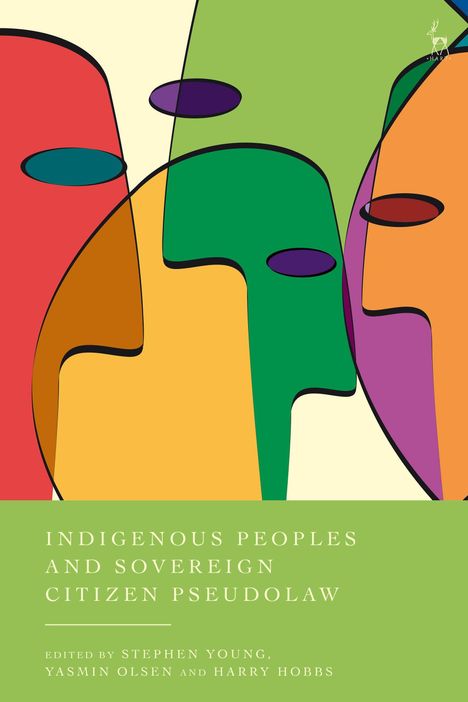
Indigenous Peoples and Sovereign Citizen Pseudolaw, Gebunden
Indigenous Peoples and Sovereign Citizen Pseudolaw
Lassen Sie sich über unseren eCourier benachrichtigen, sobald das Produkt bestellt werden kann.
- Herausgeber:
- Stephen Young, Yasmin Olsen, Harry Hobbs
- Verlag:
- Bloomsbury Publishing plc, 04/2027
- Einband:
- Gebunden
- Sprache:
- Englisch
- ISBN-13:
- 9781509999422
- Umfang:
- 352 Seiten
- Gewicht:
- 496 g
- Maße:
- 234 x 156 mm
- Stärke:
- 19 mm
- Erscheinungstermin:
- 15.4.2027
- Serie:
- Hart Publishing
- Hinweis
-
Achtung: Artikel ist nicht in deutscher Sprache!
Ähnliche Artikel


Klappentext
This book confronts a pressing and unsettling development at the intersection of law, sovereignty, and Indigenous rights: the growing entanglement between Indigenous legal traditions and sovereign citizen pseudolaw.
Bringing together leading scholars from law, anthropology, Indigenous studies, and related disciplines, the volume exposes how pseudolegal movements increasingly appropriate the language and symbolism of Indigenous sovereignty to advance anti-state and conspiratorial agendas.
The collection shows that this appropriation is not confined to non-Indigenous actors. In contexts of long-standing injustice and frustration with state institutions, some Indigenous individuals are also drawn to sovereign citizen arguments that promise autonomy or escape from state authority. Through careful analysis, the contributors explain why these claims may appear attractive, while demonstrating that they rest on legal fantasies fundamentally at odds with Indigenous legal orders. Where Indigenous laws are collective, relational, and grounded in responsibilities to land and community, pseudolaw is individualistic, property-centred, and rooted in settler-colonial entitlement.
As the first scholarly collection to systematically address this phenomenon, the volume calls for renewed intellectual clarity and sustained engagement between academics, legal practitioners, and Indigenous communities. The book traces how pseudolaw repackages older colonial strategies of appropriation and erasure in new forms. It reveals the tangible harms these entanglements cause: legal confusion, political vulnerability, and the erosion of the credibility of genuine Indigenous sovereignty claims. It offers a powerful warning about the dangers of pseudolaw and a compelling case for strengthening Indigenous-led pathways to justice, self-governance, and sovereignty.