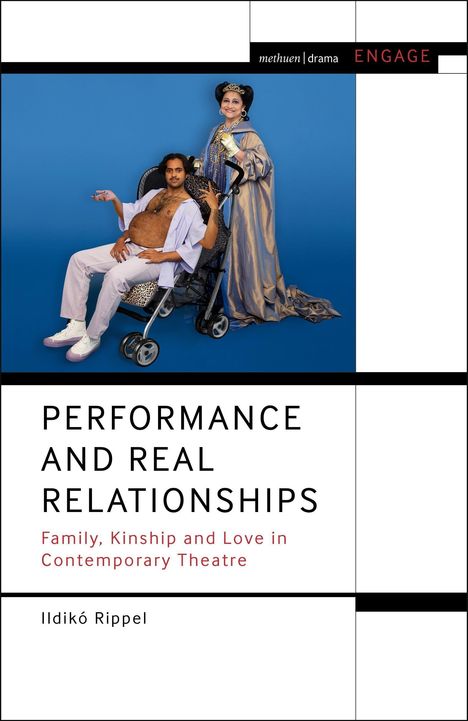
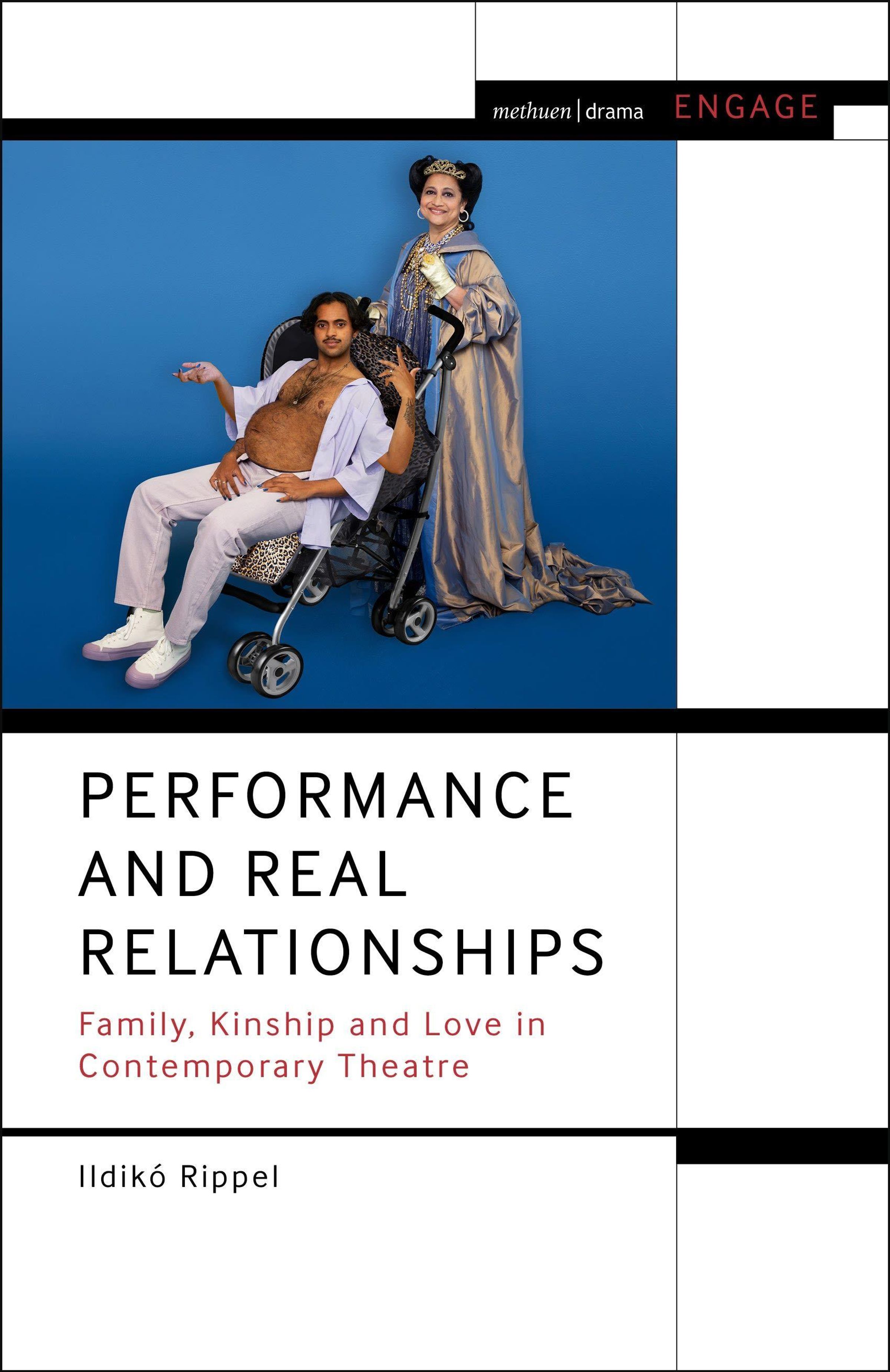
Ildikó Rippel: Performance and Real Relationships, Gebunden
Performance and Real Relationships
- Family, Kinship and Love in Contemporary Theatre
(soweit verfügbar beim Lieferanten)
- Verlag:
- Bloomsbury Publishing PLC, 09/2026
- Einband:
- Gebunden
- Sprache:
- Englisch
- ISBN-13:
- 9781350448094
- Artikelnummer:
- 12652803
- Umfang:
- 258 Seiten
- Gewicht:
- 454 g
- Maße:
- 216 x 138 mm
- Stärke:
- 25 mm
- Erscheinungstermin:
- 3.9.2026
- Serie:
- Methuen Drama
- Hinweis
-
Achtung: Artikel ist nicht in deutscher Sprache!
Klappentext
This book argues that staging real relationships and collaborating with family members has the potential to rupture theatrical representation by producing an effect of authenticity.
Drawing on psychoanalytic theory (Lacan, Kristeva), poststructuralist critique (Derrida), and feminist and queer theory, the author explores how theatre becomes a method of doing family : a set of embodied, affective and performative practices rather than a fixed institution.
The book is richly informed by case studies, supported by production photographs, including the German company SheShePop performing Testament (2010) with their fathers; Liz Clarke performing I Tattooed My Baby (2013) with her infant daughter; Zoo Indigo's Under the Covers (2009) and Blueprint (2012), performed with their children and mothers; Bryony Kimmings performing with her partner in Fake it Till you Make it (2015); and First Trimester by Queer performance maker Krishna Istha performing alongside their partner and extended 'chosen family'.
The chapters include interwoven interviews with theatre practitioners, exploring their experience of performing with family members, and offering fascinating insights into the processes, ethics and methodologies of doing so. The exploration of love and family are enriched by the author's own autobiographical reflections, written in a poetic mode of auto theory.
Ultimately, the book reveals how real relationships on stage can generate empathy, challenge normative kinship structures, and invite audiences to rethink care, love, and the many ways we do family.