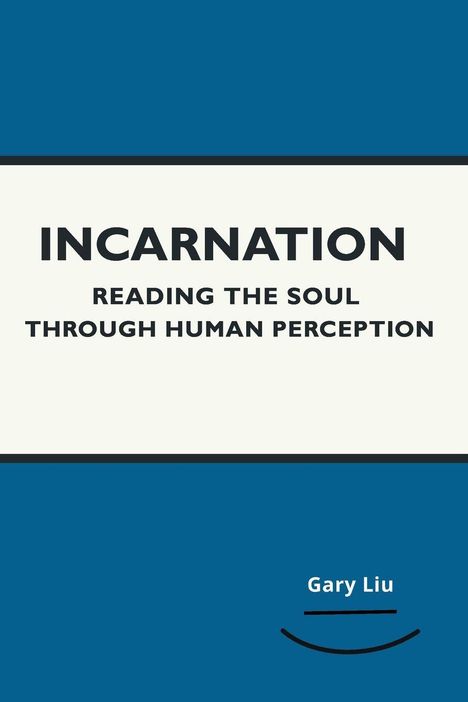
Gary Liu: Incarnation, Kartoniert / Broschiert
Incarnation
(soweit verfügbar beim Lieferanten)
- Verlag:
- Gary Liu, 05/2026
- Einband:
- Kartoniert / Broschiert
- Sprache:
- Englisch
- ISBN-13:
- 9781764634700
- Artikelnummer:
- 12703609
- Umfang:
- 220 Seiten
- Gewicht:
- 299 g
- Maße:
- 229 x 152 mm
- Stärke:
- 12 mm
- Erscheinungstermin:
- 1.5.2026
- Hinweis
-
Achtung: Artikel ist nicht in deutscher Sprache!
Klappentext
You are not the soul. You are a soul personality - a distinct geometry the soul has sent into incarnation for specific relational and developmental purposes. That distinction is not philosophical. It is structural. And it changes the stakes of everything that follows.
Most frameworks for understanding human existence start from belief, tradition, or theory. Incarnation starts from direct structural perception - and applies it to the questions that matter most: what you actually are, why you function the way you do, how to live in a way that genuinely completes what this life is asking of you, and what happens when it ends. Nine distinct soul types are mapped - each with its own geometry, its own natural orientation, and its own version of what coherent living actually looks like. Recognising your type doesn't tell you who you are. It tells you why you've always operated the way you have.
A 17-stage developmental map traces the architecture underlying every genuine cultivation tradition, regardless of cultural or religious origin. The stages are not a prescription. They describe what is already happening in any life where real development is occurring - and recognising where you are changes how you relate to both your progress and your difficulties.
Karma is examined not as moral accounting but as structural necessity - relational circuits that remain open across lifetimes because the feedback loops that once allowed completion within a single life were broken by a civilisational event deep in human prehistory. The reframing is significant. Karma is not punishment. It is a relational field completing itself across whatever timeframe that requires.
The afterlife process is mapped in precise structural terms - not as consolation, but as the geometric sequence the personality moves through at transition, shaped entirely by what has and hasn't been completed during incarnated life.
What emerges from all of this is a practical instruction simpler than the architecture suggests. The architecture is necessary to arrive at it honestly. The instruction itself is not complex. Incarnation does not ask the reader to adopt a method or accept a framework. The mappings stand or fall on their own internal consistency - and on how accurately they describe what the reader already knows from the inside.