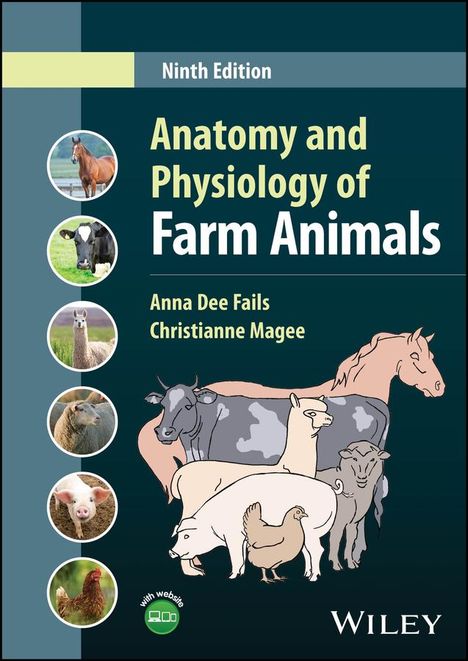
Fails, Anna Dee, Ph.D, DVM: Anatomy and Physiology of Farm Animals, Gebunden
Anatomy and Physiology of Farm Animals
(soweit verfügbar beim Lieferanten)
- Verlag:
- John Wiley & Sons Inc, 05/2025
- Einband:
- Gebunden
- Sprache:
- Englisch
- ISBN-13:
- 9781394187904
- Artikelnummer:
- 11162715
- Umfang:
- 624 Seiten
- Nummer der Auflage:
- 25009
- Ausgabe:
- 9. Auflage
- Gewicht:
- 666 g
- Maße:
- 259 x 185 mm
- Stärke:
- 33 mm
- Erscheinungstermin:
- 22.5.2025
- Hinweis
-
Achtung: Artikel ist nicht in deutscher Sprache!
Klappentext
A complete guide to the anatomy and physiology of farm animals, fully updated and revised
In the newly revised ninth edition of Anatomy and Physiology of Farm Animals, distinguished veterinary professors Drs. Anna Fails and Christianne Magee deliver a comprehensive guide for animal science, veterinary technician, and pre-veterinary students and instructors seeking a well-organized and easy-to-understand resource. The new edition offers modified and refined learning objectives at the beginning of each chapter, as well as a brand-new chapter on llamas / alpacas that highlights the significant species differences and explains the roles of these species in the wool and packing industries.
Additional illustrations enhance comprehension and improve the anatomy sections of the book. New "Study Prompts," integrative application questions, are included in each chapter in differently colored text and stimulate understanding of the material. Finally, a reorganized companion website is included with the book. It integrates fully with the print text and provides supplemental content, including word roots, clinical cases, study and practice questions, and additional images, diagrams, and videos.
Readers will also find:
- An excellent anatomy and physiology resource for high school and undergraduate students in animal science, veterinary medicine, and zoology programs
- Comprehensive explorations of the anatomy and physiology of the cell
- Practical discussions of embryology, the skeletal system, and microscopic anatomy
- Complete discussion of the physiology of muscle and the anatomy and physiology of the nervous system
A valuable comprehensive resource for advanced high school and undergraduate animal science students in agriculture, pre-veterinary, and veterinary technical program, Anatomy and Physiology of Farm Animals will also benefit people practicing in allied professions and veterinary practitioners.
Review from Jonathan Foreman, DVM, MS, DACVIM, College of Veterinary Medicine, University of Illinois at Urbana-Champaign Description This is the ninth edition of a book that has been in publication for 60 years. The previous edition was published in 2018. The book uses a body systems approach to present the pertinent anatomy and physiology of common domestic farm animals (e. g., horse, ox, sheep, goat, pig, poultry, llamas, alpacas). It is appropriately illustrated throughout with photographs and line drawings in black and white and in color where necessary or appropriate. Purpose The original author's purpose for this book was to provide foundational material intersecting both anatomy and physiology in a manner which would allow and encourage students to apply this foundational information in agricultural animals and farm applications. This ninth edition is intended to continue to provide this information at a level appropriate for students in the fields of agriculture and animal science, although veterinary technicians and veterinary students will also find this a useful text. These are worthy objectives that the book meets well. Audience The intended audience is animal science, veterinary technician, and pre-veterinary students pursuing education and employment in agricultural animal fields. Pre-veterinary and veterinary students will find the text useful in explaining and illustrating sometimes difficult concepts taught traditionally in the first year of most veterinary curricula. The book may prove particularly useful for students from non-farm backgrounds who struggle with many concepts of farm animal anatomy and physiology. For instance, rumen anatomy and function are completely foreign to most new first year veterinary students from urban or suburban backgrounds, but this book will help those students learn rumen anatomy and function more effectively. Features The text comprises 31 chapters, starting with three chapters on cellular function and embryology; 27 chapters organized by body systems; and two final chapters on poultry, llamas, and alpacas. New features of this edition include a chapter on new-world camelids, which are common veterinary patients in some farm settings. The other new features are the "Study Prompts" which are meant to help students process how the anatomy and physiology topics in the book apply to live animals they might encounter in farm situations. The book encourages readers to think about the prompts through additional study and then to seek answers, including accompanying additional learning resources, on the companion website. The website includes word roots, quizzes for self-assessment, answers and discussions of Study Prompts, and additional images including four videos. All figures from the chapters are available for downloading as PowerPoint slides on the website. This teaching feature is incredibly useful. "Clinical Extracts" are set in blue, not black, type as examples of situations where the application of basic anatomy and physiology principles might prove valuable in clinical cases. They function almost as pop-up "thought bubbles" reminding readers why the current topic is pertinent in a live-animal or clinical setting. Assessment This is a comprehensive text which can be useful for undergraduate, graduate, and veterinary students alike. There are many powerful illustrations comparing the same structure in the horse and ox, allowing students to view and learn to think comparatively rather than structuring their education strictly along species lines. This comparative approach should help to break down the silo approach that students, based on their personal experience and interest, usually use in learning anatomy and physiology when many of our domestic species have much more in common with each other than they have differences. Because it incorporates both anatomy and physiology, this approach allows greater intertwining of the two subjects of form and function than traditional texts which are usually aligned along strictly singular lines of either anatomy or physiology alone.