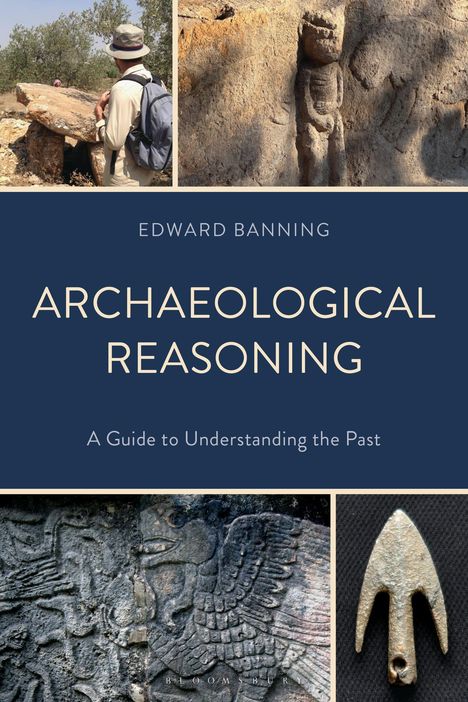
Edward Banning: Archaeological Reasoning, Kartoniert / Broschiert
Archaeological Reasoning
- A Guide to Understanding the Past
(soweit verfügbar beim Lieferanten)
- Verlag:
- Bloomsbury Publishing Plc, 04/2026
- Einband:
- Kartoniert / Broschiert
- Sprache:
- Englisch
- ISBN-13:
- 9798765157497
- Artikelnummer:
- 12305115
- Umfang:
- 368 Seiten
- Gewicht:
- 503 g
- Maße:
- 226 x 152 mm
- Stärke:
- 25 mm
- Erscheinungstermin:
- 30.4.2026
- Hinweis
-
Achtung: Artikel ist nicht in deutscher Sprache!
Weitere Ausgaben von Archaeological Reasoning |
Preis |
|---|---|
| Buch, Gebunden, Englisch | EUR 168,61* |
Klappentext
Bridging the gap between introductory and advanced archaeology courses, this book builds confidence in working with the tools of archaeological research and how to make plausible inferences about the past.
How do archaeologists learn what happened thousands of years ago when all they have to work with are clusters of broken artifacts or patterns of post holes? Are their explanations any better than theories about ancient civilizations that we see in social media or popular streaming services? This book answers those questions and more.
This book explores the ways archaeologists draw conclusions from evidence, recognizing that those interpretations will change as new evidence comes into play. Readers will learn more about the methods and research strategies that archaeologists use to understand ancient economies, social and political systems, or help date or classify sites, artifacts, or whole societies.
The first chapter discusses the nature of inference and explanation in archaeology, or "how archaeologists figure things out." Subsequent chapters cover how archaeologists use lithic technology, experiments, and classification, how styles of pottery decoration help us identify social groups, and the intricacies of dating events. The book then turns to social archaeology, from the household scale, through settlements, to landscapes and regions, and mobility and sedentism over such regions. The next two chapters consider research on trade, wealth, status, and mortuary practices. Chapter 11 focuses on food and cuisine, and the last one on the archaeology of labor.
There are also 12 exercises, with fictitious case studies from around the world and different research traditions. These build students' confidence in how to interpret data, without any expectation of statistical background. Using realistic, messy data, these exercises allow readers to think critically about how to draw reasonable conclusions, and how to add archaeological reasoning to their toolkit.