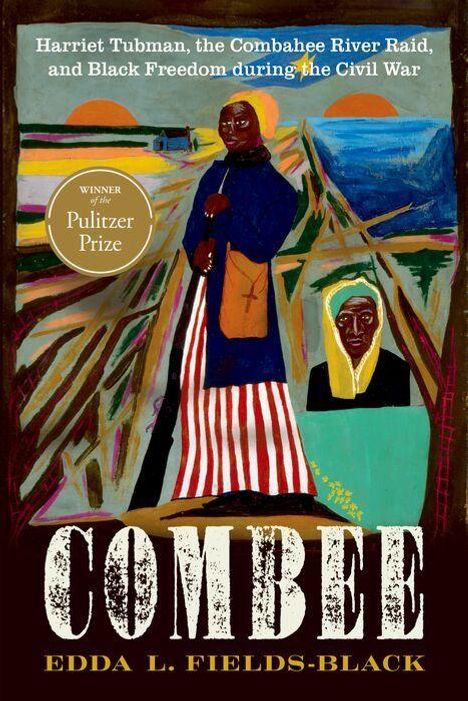
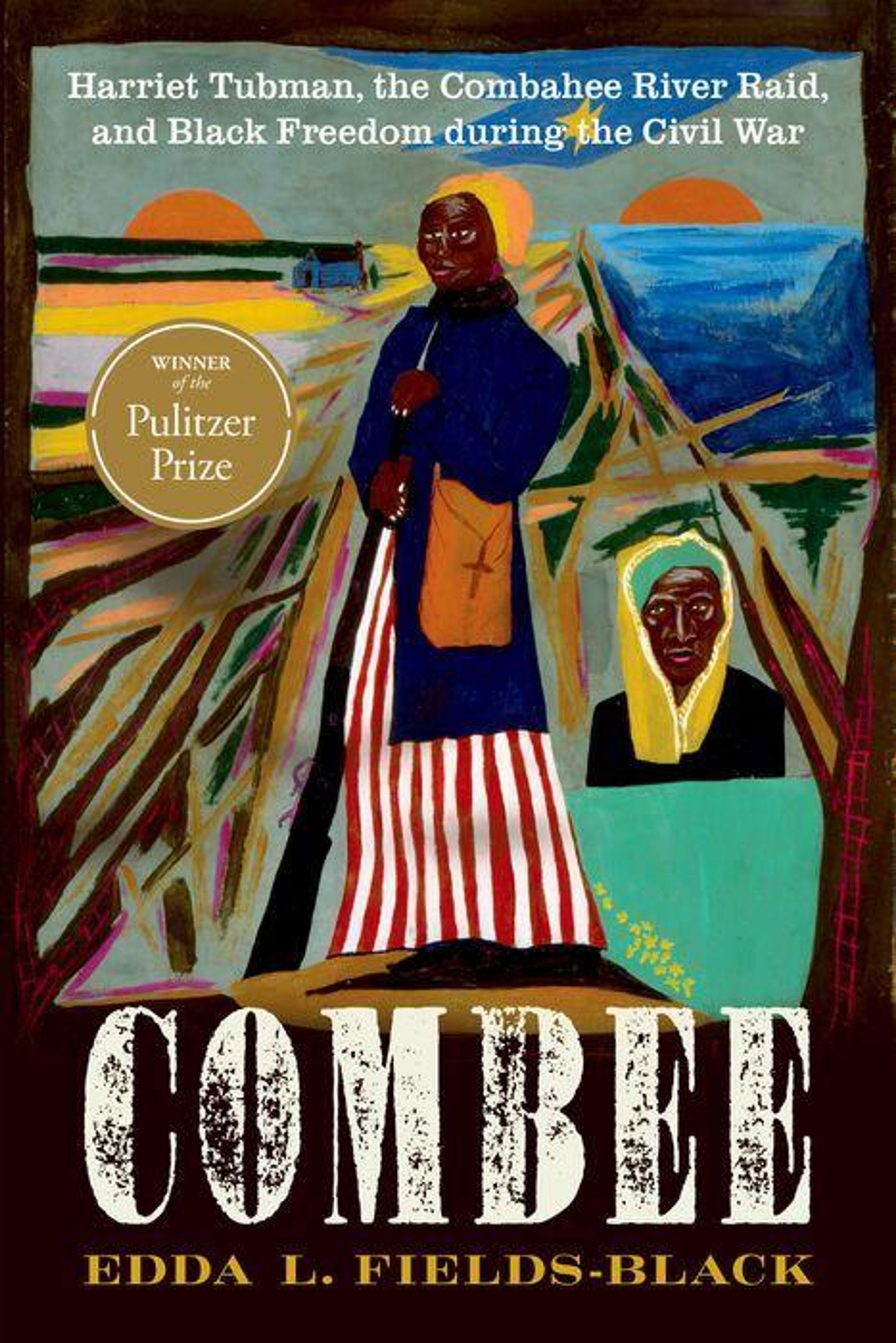
Edda L Fields-Black: Combee, Kartoniert / Broschiert
Combee
- Harriet Tubman, the Combahee River Raid, and Black Freedom During the Civil War
Sie können den Titel schon jetzt bestellen. Versand an Sie erfolgt gleich nach Verfügbarkeit.
- Verlag:
- Oxford University Press, 02/2027
- Einband:
- Kartoniert / Broschiert
- Sprache:
- Englisch
- ISBN-13:
- 9780197855355
- Artikelnummer:
- 12702157
- Umfang:
- 784 Seiten
- Erscheinungstermin:
- 2.2.2027
- Hinweis
-
Achtung: Artikel ist nicht in deutscher Sprache!
Weitere Ausgaben von Combee |
Preis |
|---|
Klappentext
WINNER - 2025 Pulitzer Prize in History
WINNER - 2025 Gilder Lehrman Lincoln Prize
WINNER - 2025 Tom Watson Brown Book Award
WINNER - 2024 George C. Rogers Jr. Award
WINNER - 2024 Marsha M. Greenlee History Award
HONORABLE MENTION - 2025 James A. Rawley Prize
FINALIST - 2025 Mark Lynton History Prize
FINALIST - 2025 ASALH Book Prize
"The Best Nonfiction Books of 2024," Bloomberg. com
"Also Recommended" among the Best Books of 2024, The New Yorker
"Best Civil War Books of 2024," Civil War Monitor
>The definitive and prize-winning account of the Combahee River Raid, one of Harriet Tubman's most extraordinary accomplishments, based on original documents and written by a descendant of one of the participants.
In the spring and summer of 1863, as the outcome of the Civil War, and with it the fate of the nation, hung in the balance, Union forces struggled to capture the offensive. Along the coastal waters of South Carolina, the Union Navy had taken the port cities of Port Royal and Beaufort, where war ships blasted their way into the harbor, driving residents inland in the "Great Beaufort Skedaddle." With a foothold on the coast, the Union then made plans to attack the expansive rice plantations lining the maze of rivers that fed into and out of the South's heartland, including the Combahee River.
On the night of June 1, 1863, three federal gunboats steamed upriver from Beaufort and, starting early the next day, destroyed seven plantations along the Combahee, resulting in the liberation of more than 700 enslaved people. One of the most successful of the war, the raid was also, argues Edda Fields-Black in COMBEE , the largest slave rebellion in the continental United States. Those enslaved along the Combahee knew "Lincoln's gun-boats" were coming and seized their freedom when they saw the chance. The raid was remarkable in several other ways: it was carried out by one of the earliest all-Black regiments, the U. S. 2nd Second South Carolina Volunteers, and its gunboats were guided by Harriet Tubman.
Fields-Black here offers the fullest account to date of this pivotal and dramatic event and the critical role that Tubman played in it. Drawing on meticulous and original research, she recreates the world of the rice plantations, and especially those in the "prison-house of bondage" who made them so profitable. She uses the archives to give these enslaved laborers names and stories, inscribing them permanently into the historical record. Among them is her third-great grandfather.
The result is an American epic-rich, dense, layered, and pulsating with the life of those whose lives were changed by the Combahee River Raid, both in the short run and over the longer term. Destructive as it was, a humbling blow to the Confederacy's morale, the raid was also an act of creation, contributing to the formation of the community that thrives to this day in the Gullah Geechee Corridor. COMBEE will become and remain the authoritative work on the raid, all its historical actors, and its long aftermath.