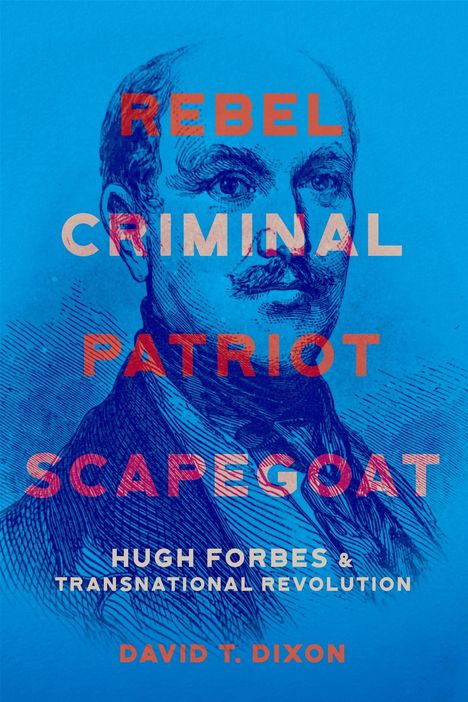
David T Dixon: Rebel, Criminal, Patriot, Scapegoat, Kartoniert / Broschiert
Rebel, Criminal, Patriot, Scapegoat
- Hugh Forbes and Transnational Revolution
Lassen Sie sich über unseren eCourier benachrichtigen, sobald das Produkt bestellt werden kann.
- Verlag:
- LSU Press, 03/2027
- Einband:
- Kartoniert / Broschiert
- Sprache:
- Englisch
- ISBN-13:
- 9780807187906
- Umfang:
- 256 Seiten
- Gewicht:
- 349 g
- Maße:
- 229 x 152 mm
- Stärke:
- 15 mm
- Erscheinungstermin:
- 18.3.2027
- Hinweis
-
Achtung: Artikel ist nicht in deutscher Sprache!
Ähnliche Artikel


Klappentext
A transnational turn in history scholarship has reframed key nineteenth-century events, such as the American Civil War and the European revolutions of 1848, as outcomes of a broader movement to promote republican governance, universal human freedom, and free labor. Sweeping narratives of leaders like Mazzini, Garibaldi, and Kossuth abound. But there are few case studies of these leaders' transnational agents, who abandoned careers, alienated friends and family, and risked their lives to fight for political, economic, and social justice in the Euro-American world. In Rebel, Criminal, Patriot, Scapegoat, David T. Dixon begins to fill that gap in the literature by charting the evolution of Hugh Forbes's role as a transnational soldier and activist who collaborated with prominent revolutionary leaders during extended residences in England, France, Tuscany, and the United States.
Forbes ran a transnational crime syndicate out of Paris, fought with Garibaldi in 1848--49 and again in 1860, organized and led émigrés in New York City throughout the 1850s, and served as John Brown's military consultant. By employing an interdisciplinary approach and leveraging current scholarship in history, criminology, popular literature, and social psychology, Dixon helps readers understand the emotional motivations and material challenges that Forbes and other transnational agents faced. Rebel, Criminal, Patriot, Scapegoat illustrates how transnational networks originated, operated, disseminated radical agendas, and sought to influence events in the nineteenth-century Atlantic geopolitical sphere.