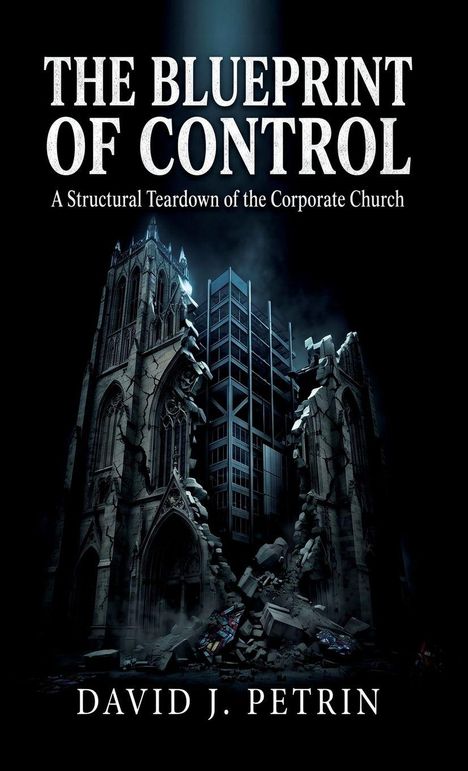
David J Petrin: The Blueprint of Control, Gebunden
The Blueprint of Control
- A Structural Teardown of the Corporate Church
(soweit verfügbar beim Lieferanten)
- Verlag:
- DJRIDES, 07/2026
- Einband:
- Gebunden
- Sprache:
- Englisch
- ISBN-13:
- 9798349467974
- Artikelnummer:
- 12834275
- Umfang:
- 104 Seiten
- Gewicht:
- 271 g
- Maße:
- 216 x 140 mm
- Stärke:
- 8 mm
- Erscheinungstermin:
- 22.7.2026
- Hinweis
-
Achtung: Artikel ist nicht in deutscher Sprache!
Klappentext
The Blueprint of Control: A Structural Teardown of the Corporate Church is a work of theological and historical analysis that examines the evolution of the institutional church from a fluid, apostolic movement into a rigid, bureaucratic machine. The book is written from a perspective favoring primitive apostolic Christianity and encourages readers to evaluate ecclesiastical structures against Biblical teachings and their own consciences.
The book is organized into several key sections: The Historical Foundations: The author traces the origins of the "ecclesiastical machine" back to the 4th-century Romanization under Constantine, arguing that the integration of the church into the Roman Empire transformed it from an organic, relational community into an administrative apparatus. This section further analyzes the 12th-century canon law revolution, which the author describes as the moment the church achieved "self-awareness" as a transnational legal state, and the subsequent Counter-Reformation, which solidified this control through hyper-precise legalism and manualist theology.
Mechanics of Institutional Control: The text explores how the institution allegedly weaponized concepts such as "validity" to monopolize divine grace through sacraments, controlled the "Word of God" via clerical filters, and bureaucratized belonging by turning relational fellowship into tracked corporate membership. It also examines the use of institutional obedience to insulate leadership from accountability.
Cultural Pathologies: The author describes the emergence of a "culture of cover-up" where brand management takes precedence over the preservation of the body, and analyzes "clericalism" as a destructive caste system that separates the ordained elite from the laity.
The Architecture of Liberation: The final section encourages readers to move toward a "flat, horizontal brotherhood". The author argues that the true legacy of the faith persists in underground communities that exist outside of institutional grids, characterized by direct fellowship, mutual agency, and a return to the "unmeasured fire of the Spirit".
The book explicitly states that its views are those of the author, does not constitute legal or canonical advice, and is not affiliated with any religious institution. It emphasizes that its critique is directed at systemic momentum and institutional architecture rather than a narrative of conscious human conspiracy.