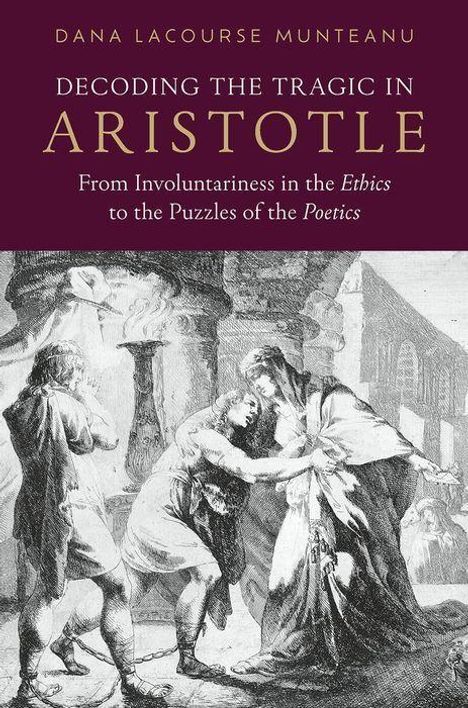
Dana Lacourse Munteanu: Decoding the Tragic in Aristotle, Gebunden
Decoding the Tragic in Aristotle
- From Involuntariness in the Ethics to the Puzzles of the Poetics
(soweit verfügbar beim Lieferanten)
- Verlag:
- Oxford University Press, 03/2026
- Einband:
- Gebunden
- Sprache:
- Englisch
- ISBN-13:
- 9780197836804
- Artikelnummer:
- 12565509
- Umfang:
- 248 Seiten
- Gewicht:
- 513 g
- Maße:
- 238 x 167 mm
- Stärke:
- 22 mm
- Erscheinungstermin:
- 30.3.2026
- Hinweis
-
Achtung: Artikel ist nicht in deutscher Sprache!
Klappentext
Decoding the Tragic in Aristotle posits that a specific form of involuntary action lies at the heart of Aristotle's conception of the tragic-a point that remains unexplained in the Poetics . This key insight is illuminated through Aristotle's ethical works, particularly theNicomachean Ethics and Eudemian Ethics , where the philosopher discusses a type of counter-voluntary error (hamartia ) rooted in ignorance of particulars. These references clarify the tragic mechanisms behind the most celebrated dramatic structures in Poetics chapters 13 and 14, which have long appeared inexplicably contradictory.
Aristotle's notion of involuntariness is distinct from mere accident, chance, or misfortune. It represents the highest tragic degree when fully integrated into the action that tragedy depicts, evoking the most profound pity, fear, and a sense of wonder. While the ethical treatises help clarify Aristotle's aesthetic theory, they do not-as is sometimes claimed-impose a moral or didactic framework onto tragedy in response to Plato's critique. The Poetics remains focused on the structural conditions that best produce the tragic effect, understood as simultaneously emotional, cognitive, and psychologically compelling.
Elsewhere, Aristotle does engage with moral dilemmas-such as Neoptolemus' in Sophocles' Philoctetes -and with ethical and rhetorical problems embedded in drama, aligning more closely with traditional philosophical approaches to tragedy. Yet he carefully distinguishes between what makes a tragedy effective in the Poetics and what tragedies are ethically good for in other contexts.
Ultimately, Decoding the Tragic in Aristotle reveals Aristotle's concept of the tragic as both singular and forward-looking-anticipating contemporary insights from cognitive theory and neuroaesthetics, which sets it apart from other philosophical and literary accounts.