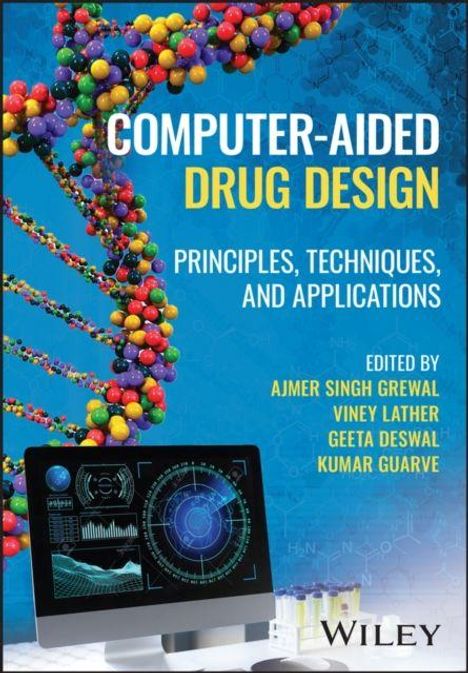
Computer-Aided Drug Design, Gebunden
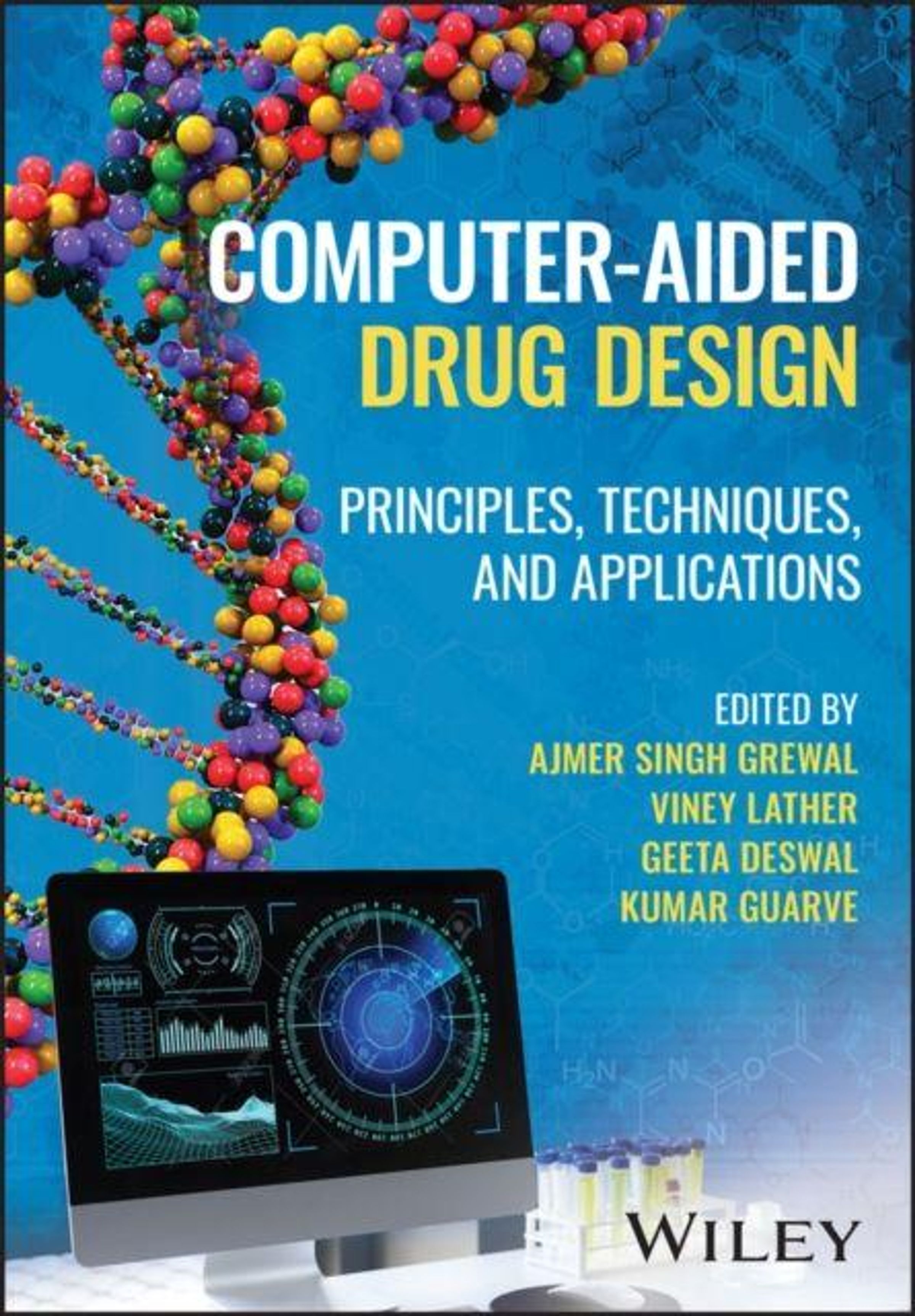
Computer-Aided Drug Design
- Principles, Techniques, and Applications
(soweit verfügbar beim Lieferanten)
- Herausgeber:
- Ajmer Singh Grewal, Viney Lather, Geeta Deswal, Kumar Guarve
- Verlag:
- Wiley, 08/2026
- Einband:
- Gebunden
- Sprache:
- Englisch
- ISBN-13:
- 9781394371082
- Artikelnummer:
- 12648540
- Umfang:
- 448 Seiten
- Gewicht:
- 992 g
- Maße:
- 251 x 176 mm
- Stärke:
- 26 mm
- Erscheinungstermin:
- 17.8.2026
- Hinweis
-
Achtung: Artikel ist nicht in deutscher Sprache!
Klappentext
Integrate QSAR, molecular docking, AI, and nanotechnology into drug design
Computational approaches now drive critical decisions at every stage of drug discovery and development. Computer-Aided Drug Design: Principles, Techniques, and Applications provides an in-depth treatment of CADD methodologies, from QSAR and molecular docking to pharmacophore mapping and virtual screening. Written by Ajmer Singh Grewal, a pharmaceutical chemistry researcher with nearly 13 years of experience, each chapter links theoretical foundations directly to real-world drug design applications.
Computer-Aided Drug Design covers molecular and quantum mechanics, energy minimization, ADMET prediction, de novo drug design, and homology modeling. The book integrates artificial intelligence, machine learning, and nanotechnology into its treatment of contemporary drug discovery workflows. Case studies demonstrate practical use of computational tools, connecting technique-level detail to tangible outcomes in anticancer, anti-diabetic, anti-inflammatory, and Alzheimer's therapeutic research programs.
Readers will also find:
- Detailed coverage of QSAR modeling, molecular docking protocols, and pharmacophore mapping with step-by-step computational methodologies for each technique
- Integration of artificial intelligence and machine learning approaches into structure-based and ligand-based drug design workflows
- Practical guidance on ADMET prediction tools and their application to optimizing drug candidate selectivity and efficacy
- Real-world case studies linking computational modeling to therapeutic outcomes across multiple disease areas including oncology and neurodegeneration
- Coverage of de novo drug design, homology modeling, and virtual screening techniques with current computational tools and software platforms
Designed for pharmaceutical scientists, computational chemists, bioinformatics and cheminformatics professionals, and advanced postgraduate students, this reference connects foundational CADD principles with current AI-driven and nanotechnology-enhanced approaches. It serves as a practical resource for researchers and drug developers seeking to apply computational methods across the drug discovery pipeline.