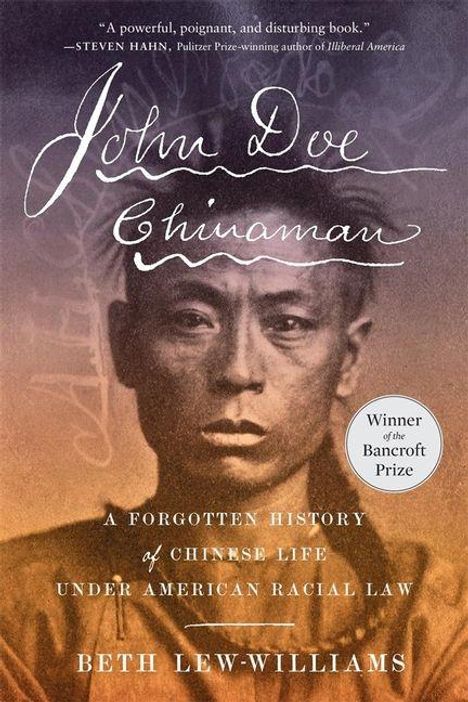
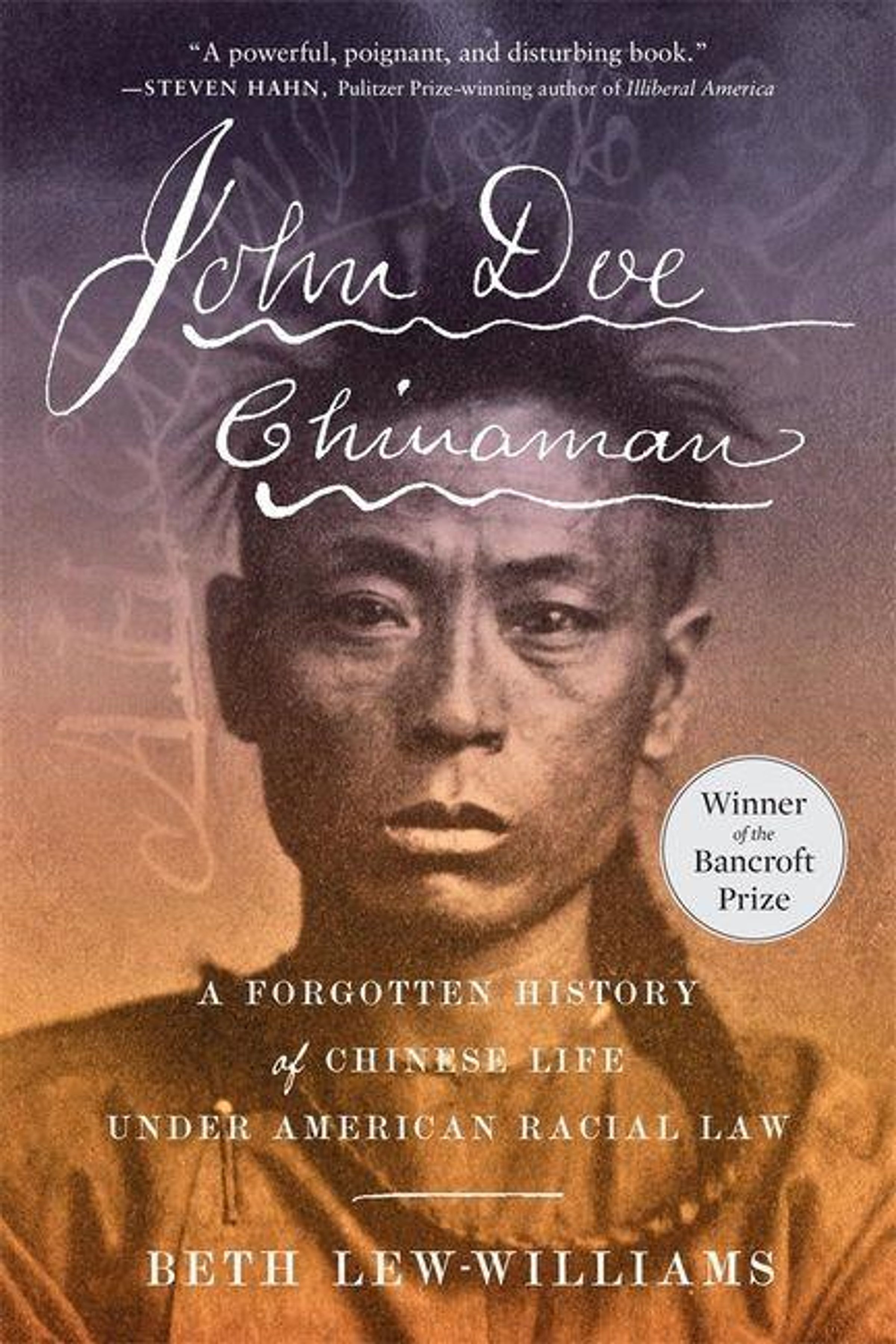
Beth Lew-Williams: John Doe Chinaman, Kartoniert / Broschiert
John Doe Chinaman
- A Forgotten History of Chinese Life Under American Racial Law
Sie können den Titel schon jetzt bestellen. Versand an Sie erfolgt gleich nach Verfügbarkeit.
- Verlag:
- Harvard University Press, 01/2027
- Einband:
- Kartoniert / Broschiert
- Sprache:
- Englisch
- ISBN-13:
- 9780674308190
- Artikelnummer:
- 12868500
- Umfang:
- 376 Seiten
- Erscheinungstermin:
- 5.1.2027
- Hinweis
-
Achtung: Artikel ist nicht in deutscher Sprache!
Weitere Ausgaben von John Doe Chinaman |
Preis |
|---|---|
| Buch, Gebunden, Englisch | EUR 42,31* |
Klappentext
Winner of the Bancroft Prize
Winner of the David J. Langum Prize
Winner of the Merle Curti Social History Award
Longlist, Cundill History Prize
A revelatory history of the laws that conditioned the everyday lives of Chinese people in the American West-and of those who negotiated, circumvented, and resisted discrimination.
Legal discrimination against Chinese people in the United States began in 1852, with a California tax on foreign gold miners that was explicitly designed to exploit Chinese labor. In the ensuing decades, California, Oregon, Washington, and other western states instituted more than five thousand laws that marginalized and controlled Chinese residents. Long before the Chinese Exclusion Act banned Chinese immigration, these laws constrained the activities and opportunities of Chinese people already living in the United States.
In this eye-opening account, Beth Lew-Williams describes a legal architecture redolent of Jim Crow but tailored to the people whom official records often referred to only as "John Doe Chinaman" and "Mary Chinaman." Enforced by police, tax collectors, schoolteachers, missionaries, and neighbors, these laws severely limited Chinese access to American society. Cementing stereotypes of Chinese as criminals, invaders, and predators, states regulated everything from healthcare and property ownership to business formation and kinship customs. Yet Chinese communities reacted resourcefully. Many fought, evaded, and manipulated racist laws, finding ways to maintain prohibited traditions, resist unfair treatment in court, and insist on their political rights.
Revealing the depth of anti-Chinese discrimination beyond federal exclusion, John Doe Chinaman tells the stories of those who refused to accept a conditional place in American life.