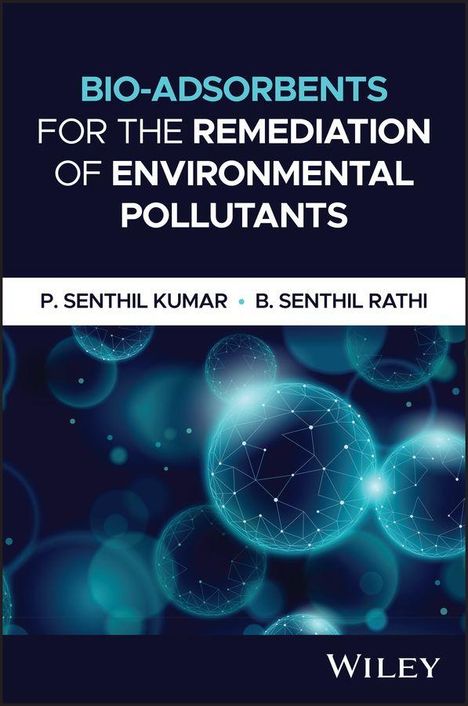
B. Senthil Rathi: Bioadsorbents for the Remediation of Environmental Pollutants, Gebunden
Bioadsorbents for the Remediation of Environmental Pollutants
Sie können den Titel schon jetzt bestellen. Versand an Sie erfolgt gleich nach Verfügbarkeit.
- Verlag:
- John Wiley & Sons Inc, 09/2026
- Einband:
- Gebunden
- Sprache:
- Englisch
- ISBN-13:
- 9781394312160
- Artikelnummer:
- 12647524
- Umfang:
- 272 Seiten
- Erscheinungstermin:
- 21.9.2026
- Hinweis
-
Achtung: Artikel ist nicht in deutscher Sprache!
Klappentext
Low-cost biomass-based solutions for effective water pollutant removal
Rising water contamination from industrialization and urbanization demands energy-efficient treatment alternatives. Bioadsorbents for the Remediation of Environmental Pollutantsdelivers a systematic examination of biomass-derived materials for removing contaminants from water and wastewater. Two experienced researchers in pollution control provide detailed coverage of synthesis methods, characterization techniques, and practical applications across multiple contaminant types and concentrations.
This reference covers biomass-derived adsorbents from agricultural waste, microbial sources, and other biological materials. Chapters address nanotechnology-based nano-biosorbents, specific applications in dye removal and heavy metal remediation, and treatment of emerging contaminants. The book evaluates life cycle assessment methodologies, economic considerations, and environmental impacts to support informed material selection for industrial wastewater treatment applications.
Key topics include:
- Synthesis techniques for novel bioadsorbents including preparation methods, modification strategies, and optimization parameters for enhanced pollutant binding capacity
- Characterization protocols using spectroscopic, microscopic, and thermal analysis methods to evaluate bioadsorbent properties and performance characteristics
- Application guidance for removing dyes, heavy metals, and emerging contaminants with comparative analysis of removal efficiencies across material types
- Nanotechnology approaches for developing nano-biosorbents with improved surface area, reactivity, and selectivity for targeted pollutant removal
- Economic and environmental assessment frameworks including life cycle analysis to evaluate sustainability and cost-effectiveness of bio-adsorbent technologies
Bioadsorbents for the Remediation of Environmental Pollutants will benefit environmental scientists, chemical engineers, and researchers working in water treatment, bioremediation, and pollution control. It's also essential for manufacturing, mining, agriculture, and pharmaceuticals professionals seeking sustainable wastewater solutions and practical guidance for selecting and implementing bio-adsorbent technologies.