Aquaculture, Kartoniert / Broschiert
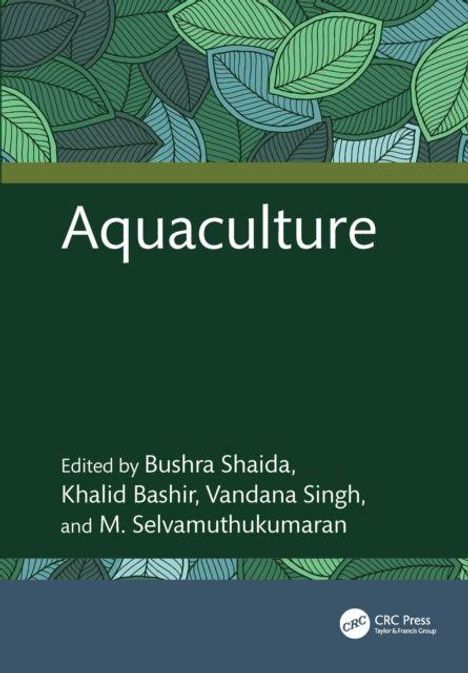
Aquaculture
- Alternative Protein Sources for Sustainable Diets
Sie können den Titel schon jetzt bestellen. Versand an Sie erfolgt gleich nach Verfügbarkeit.
- Herausgeber:
- Bushra Shaida, Khalid Bashir, M. Selvamuthukumaran, Vandana Singh
- Verlag:
- Taylor & Francis Ltd, 02/2027
- Einband:
- Kartoniert / Broschiert
- Sprache:
- Englisch
- ISBN-13:
- 9781041081630
- Artikelnummer:
- 12906850
- Umfang:
- 264 Seiten
- Erscheinungstermin:
- 24.2.2027
- Hinweis
-
Achtung: Artikel ist nicht in deutscher Sprache!
Weitere Ausgaben von Aquaculture |
Preis |
|---|---|
| Buch, Gebunden, Englisch | EUR 317,65* |
Klappentext
Aquaculture: Alternative Protein Sources for Sustainable Diets presents a rigorous, multidisciplinary account of how aquatic food systems can underpin global protein security and sustainable nutrition. Tracing the field's evolution from traditional subsistence practices to contemporary intensive and semiintensive models, it establishes the scientific and operational foundations of aquaculture-principles, global production trends, system classifications, and interactions across aquatic and terrestrial ecosystems-while interrogating the technologies and policy frameworks that have shaped livelihoods, poverty alleviation and economic growth.
At the heart of the book is sustainability. Dedicated chapters examine ecological carrying capacity, biodiversity conservation, disease epidemiology and biosecurity, alongside weed and predator control, harvesting strategies and postharvest handling. Environmental impacts are assessed with evidencebased mitigation strategies to balance productivity with ecosystem integrity. Speciesfocused sections cover finfish, shrimps and prawns, crabs, oysters, seaweeds and other emerging aquatic biomasses, detailing taxonomy, diversity, culture systems, nutritional composition, protein extraction and processing technologies, digestibility and amino acid profiles. Case studies demonstrate how aquaculturederived proteins can help address proteinenergy malnutrition, enrich food products and strengthen food system resilience.
The book advances into integrative models-integrated aquaculture-agriculture and aquaponics-that embody circular economy principles through nutrient recycling and wateruse efficiency, with clear analysis of environmental and logistical implications. Frontier innovations in genetics, genomics and biotechnology are explored for improving growth performance, disease resistance, feed utilisation and product quality, complemented by economic evaluations, management strategies, SWOT/SWOC assessments and forwardlooking scenarios that illuminate risks and opportunities. Authoritative and applied, this book positions aquaculture as a scientifically robust, nutritionally superior and environmentally responsible pillar of sustainable diets-an essential resource for researchers, practitioners, policymakers and advanced students across aquaculture, food science, nutrition and environmental management.