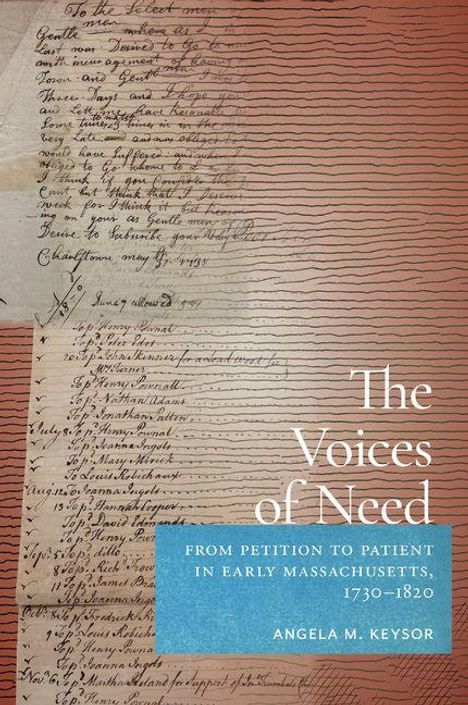
Angela M Keysor: The Voices of Need, Gebunden
The Voices of Need
- From Petition to Patient in Early Massachusetts, 1730-1820
Lassen Sie sich über unseren eCourier benachrichtigen, sobald das Produkt bestellt werden kann.
- Verlag:
- University of Massachusetts Press, 12/2026
- Einband:
- Gebunden
- Sprache:
- Englisch
- ISBN-13:
- 9781625349767
- Umfang:
- 192 Seiten
- Gewicht:
- 454 g
- Erscheinungstermin:
- 25.12.2026
- Hinweis
-
Achtung: Artikel ist nicht in deutscher Sprache!
Weitere Ausgaben von The Voices of Need |
Preis |
|---|---|
| Buch, Kartoniert / Broschiert, Englisch | EUR 31,40* |
Ähnliche Artikel


Klappentext
Revealing how people in need advocated for and negotiated their own care until the development of standardized medicine
The Voices of Need uncovers how men and women in Charlestown, Massachusetts, who turned to municipal authorities for aid, actively shaped how their need was understood and addressed. Through a close examination of Charlestown's care networks, Angela Keysor shows how town selectmen relied on sufferers themselves to articulate what would relieve their distress, while local women---paid by town authorities---provided hands-on care in homes and neighborhoods. These networks flourished in the early and mid-eighteenth century, but their flexibility and responsiveness were increasingly strained by crisis and change. A devastating smallpox epidemic in 1763, followed by racialized debates over belonging after the legal end of enslavement in Massachusetts in 1783, exposed the limits of community-based care.
After the American Revolution, rising numbers of aid requests prompted town officials to reorganize care through a contract system in which paid caregivers attended to multiple dependents at once. As care became centralized and standardized, the space for individuals to define their own needs---and to influence how those needs were met---steadily narrowed. By 1819, with the founding of Massachusetts General Hospital, sufferers were fully redefined as patients, expected to submit to professional authority rather than participate in decisions about their own care.
Tracing this transition from negotiated assistance to institutional medicine, The Voices of Need illuminates a largely forgotten history of agency among the poor and infirm. In doing so, Keysor challenges conventional narratives of early American health care and shows how the rise of standardized medicine fundamentally reshaped the meaning of need, care, and authority.