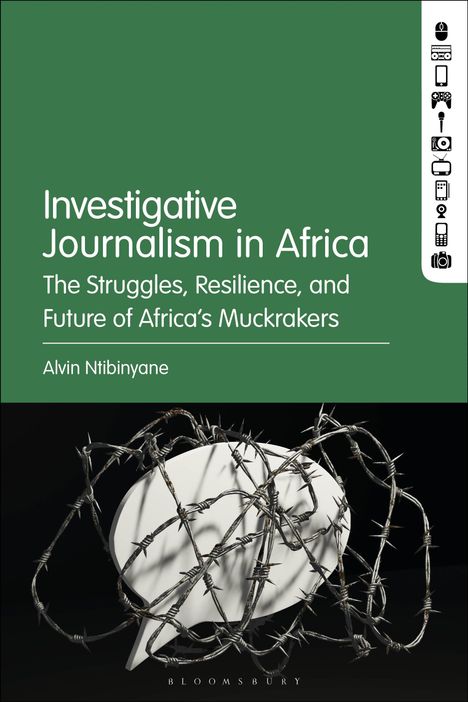
Alvin Ntibinyane: Investigative Journalism in Africa, Gebunden
Investigative Journalism in Africa
- The Struggles, Resilience, and Future of Africa's Muckrakers

Lassen Sie sich über unseren eCourier benachrichtigen, sobald das Produkt bestellt werden kann.
- Verlag:
- Bloomsbury Publishing plc, 11/2026
- Einband:
- Gebunden
- Sprache:
- Englisch
- ISBN-13:
- 9781501385360
- Umfang:
- 256 Seiten
- Gewicht:
- 454 g
- Maße:
- 229 x 152 mm
- Stärke:
- 25 mm
- Erscheinungstermin:
- 26.11.2026
- Hinweis
-
Achtung: Artikel ist nicht in deutscher Sprache!
Ähnliche Artikel


Klappentext
Investigative Journalism in Africa offers a deeply reported account of the individuals who sustain investigative reporting across a continent where journalism often unfolds under conditions of political intimidation, legal harassment, exile, and violence.
Through a series of narrative case studies, the book explores the motivations, ethical commitments, and personal sacrifices that drive African investigative journalists to confront corruption and abuse of power despite considerable personal risk. Combining historical context with biographical storytelling, it traces the evolution of investigative journalism in Africa while foregrounding the lived experiences of some of the continent's most prominent reporters. Each chapter examines the professional journeys of journalists who have exposed political corruption, state violence, and systemic injustice in countries such as Uganda, Burundi, Kenya, Zambia, Zimbabwe, and across West Africa. Their stories reveal the fragile ecosystems in which investigative journalism operates, including newsrooms navigating censorship, surveillance, economic precarity, and threats to personal safety.
Moving beyond conventional accounts that frame investigative reporting solely as a set of technical skills, Ntibinyane Alvin Ntibinyane argues that African investigative journalism is fundamentally driven by purpose: a moral commitment to public accountability, democratic participation, and social justice. The experiences of these journalists illustrate how investigative reporting becomes both a professional vocation and a form of civic resistance. By situating individual biographies within broader political and media systems, Investigative Journalism in Africa illuminates the courage, resilience, and ethical convictions that sustain the continent's democratic watchdogs. Ultimately, the book advances a broader argument for understanding investigative journalism in Africa not merely as a professional practice, but as an emerging epistemology rooted in lived experience, risk, and a persistent search for truth.