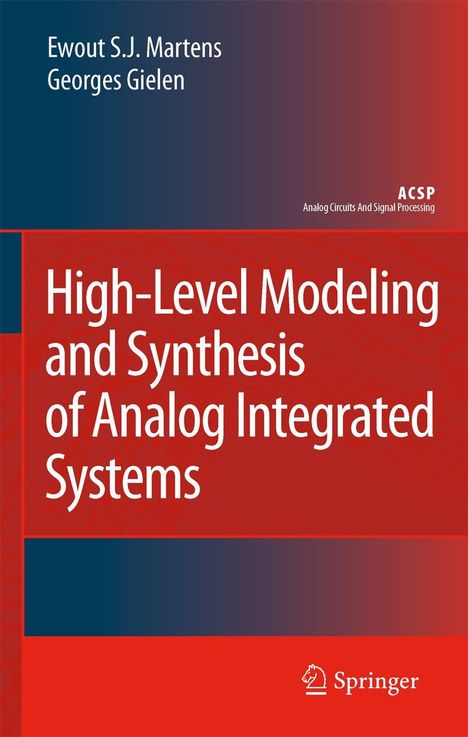
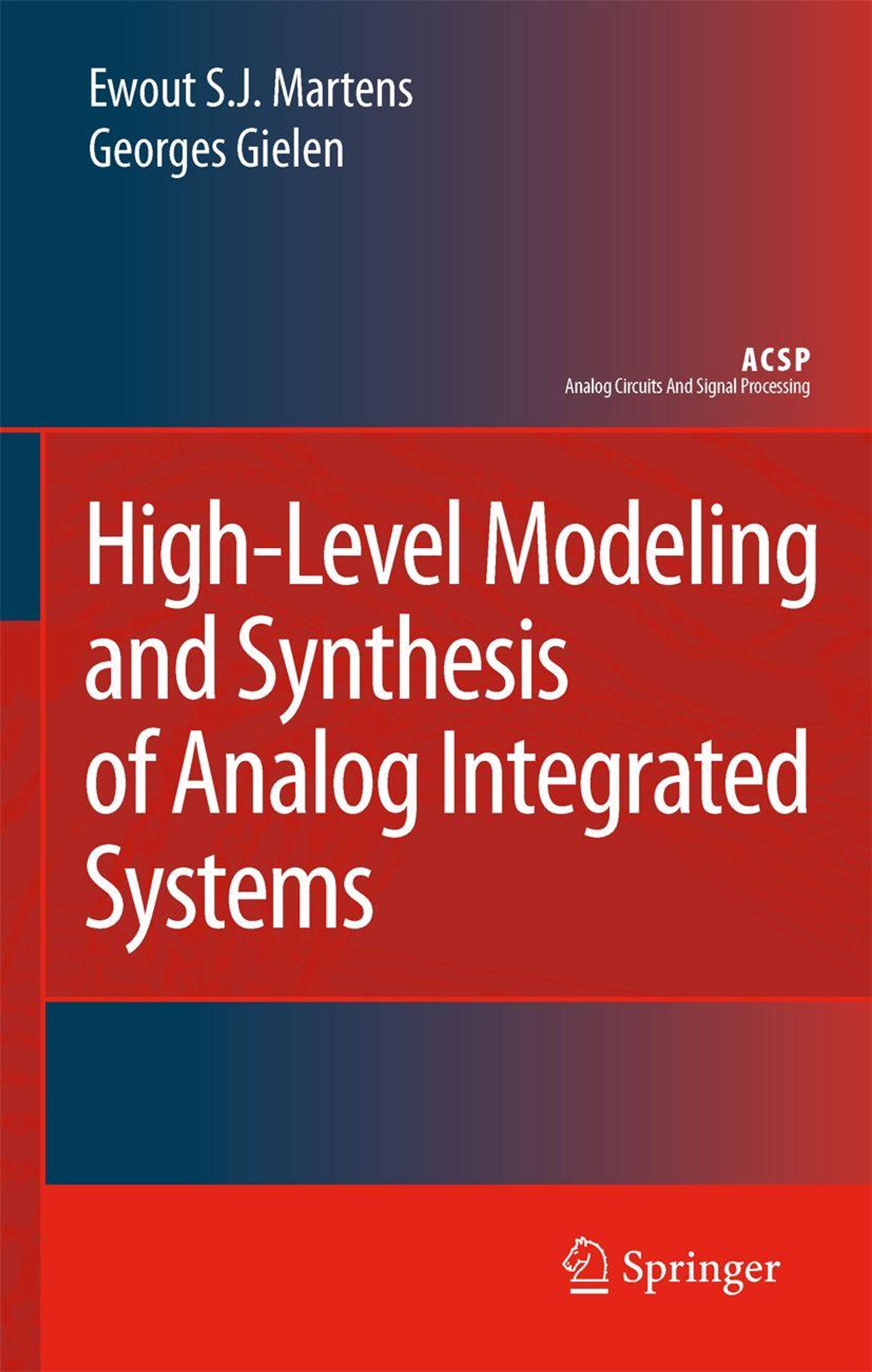
Ewout S J Martens: High-Level Modeling and Synthesis of Analog Integrated Systems, Gebunden
High-Level Modeling and Synthesis of Analog Integrated Systems
(soweit verfügbar beim Lieferanten)
- Verlag:
- Springer, 01/2008
- Einband:
- Gebunden, ,
- Sprache:
- Englisch
- ISBN-13:
- 9781402068010
- Artikelnummer:
- 6481079
- Umfang:
- 275 Seiten
- Nummer der Auflage:
- 2008
- Ausgabe:
- 2008 edition
- Copyright-Jahr:
- 2008
- Gewicht:
- 566 g
- Maße:
- 242 x 166 mm
- Stärke:
- 30 mm
- Erscheinungstermin:
- 8.1.2008
- Hinweis
-
Achtung: Artikel ist nicht in deutscher Sprache!
Klappentext
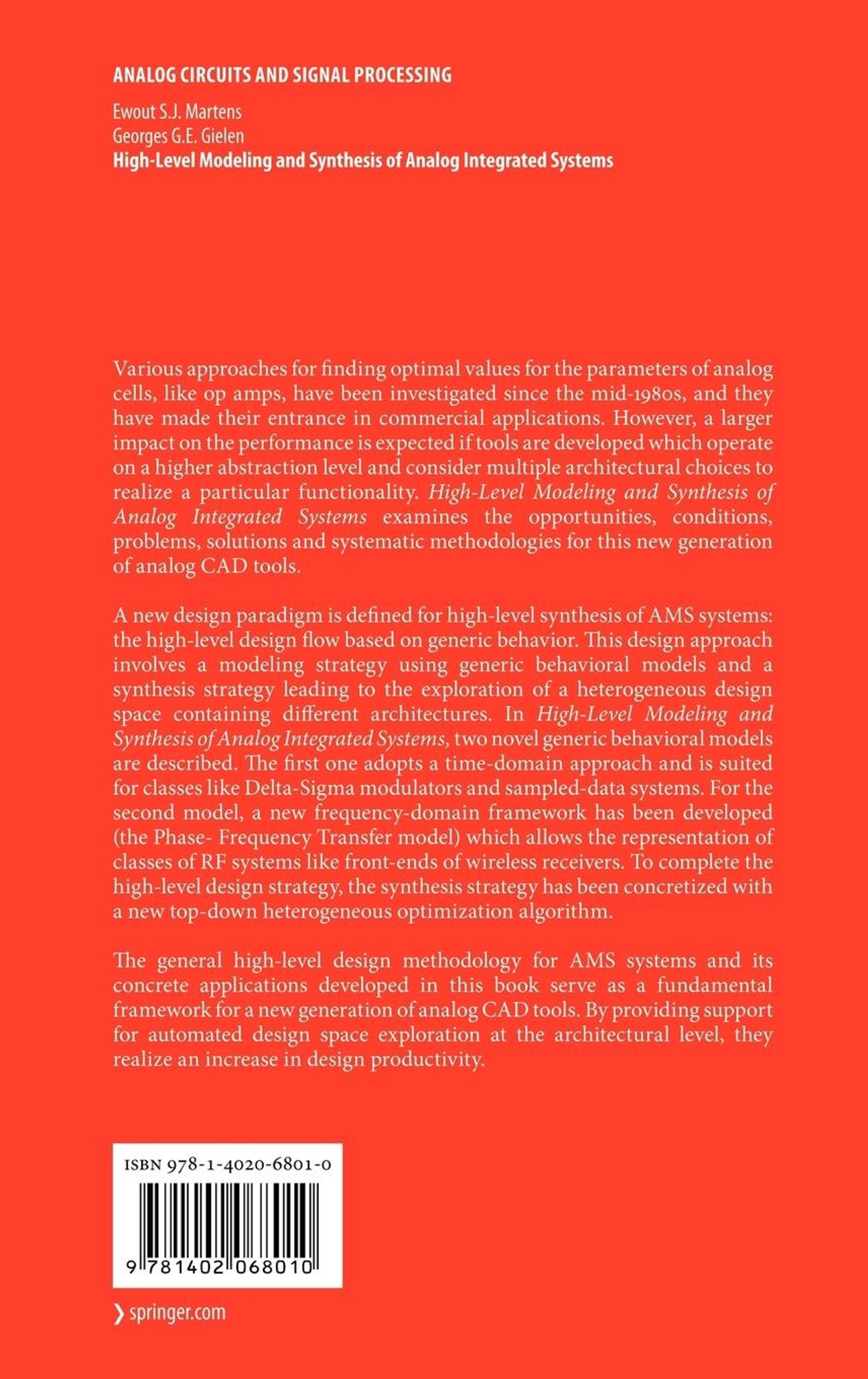
Various approaches for finding optimal values for the parameters of analog cells, like op amps, have been investigated since the mid-1980s, and they have made their entrance in commercial applications. However, a larger impact on the performance is expected if tools are developed which operate on a higher abstraction level and consider multiple architectural choices to realize a particular functionality. High-Level Modeling and Synthesis of Analog Integrated Systems examines the opportunities, conditions, problems, solutions and systematic methodologies for this new generation of analog CAD tools.
A new design paradigm is defined for high-level synthesis of AMS systems: the high-level design flow based on generic behavior. This design approach involves a modeling strategy using generic behavioral models and a synthesis strategy leading to the exploration of a heterogeneous design space containing different architectures. In High-Level Modeling and Synthesis of Analog Integrated Systems, two novel generic behavioral models are described. The first one adopts a time-domain approach and is suited for classes like Delta-Sigma modulators and sampled-data systems. For the second model, a new frequency-domain framework has been developed (the Phase- Frequency Transfer model) which allows the representation of classes of RF systems like front-ends of wireless receivers. To complete the high-level design strategy, the synthesis strategy has been concretized with a new top-down heterogeneous optimization algorithm.
The general high-level design methodology for AMS systems and its concrete applications developed in this book serve as a fundamental framework for a new generation of analog CAD tools. By providing support for automated design space exploration at the architectural level, they realize an increase in design productivity.