
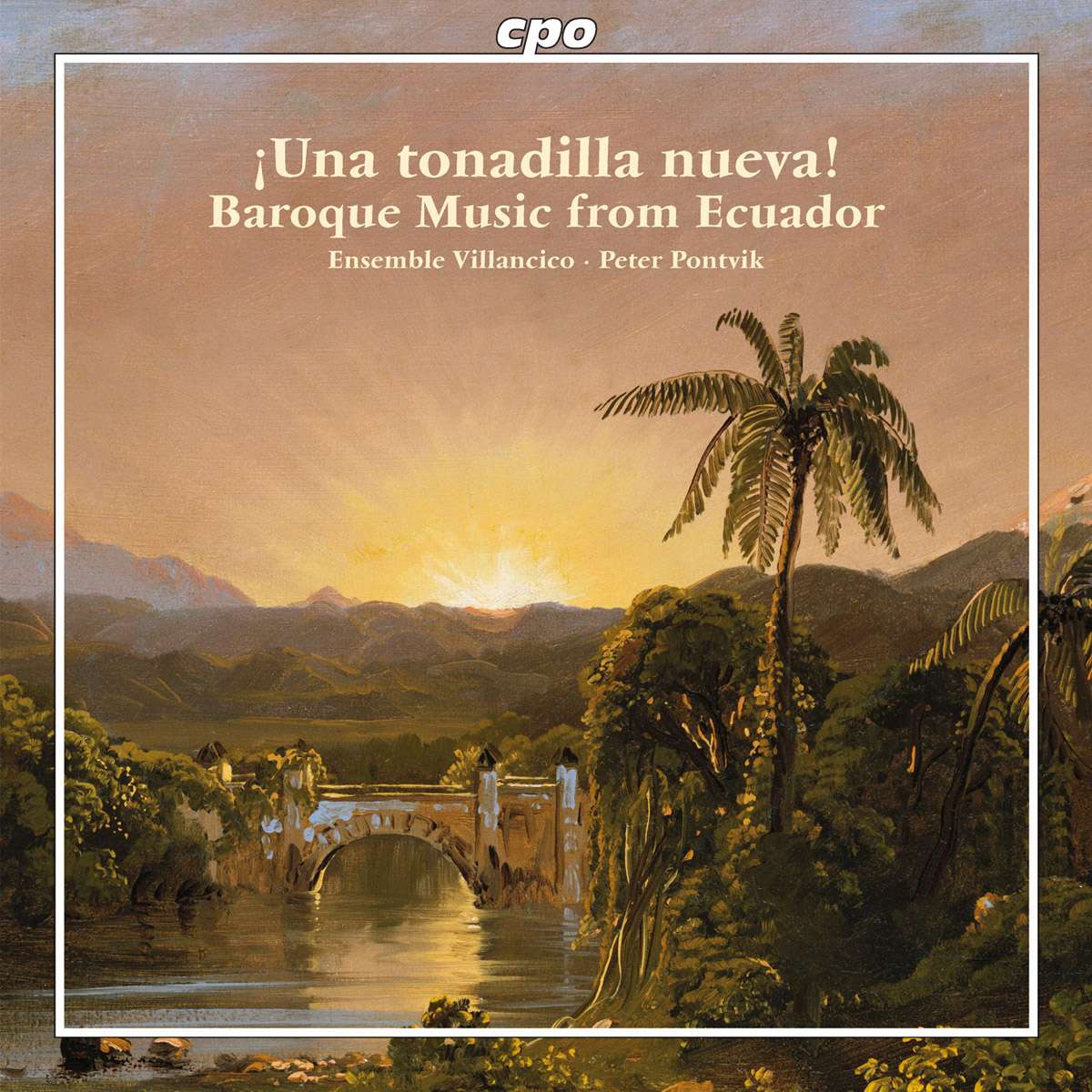
Ecuador Baroque
Ecuador Baroque
Mit Werken von:
Joseph Hortuno (1700-1722)
, Gutierre Fernandez Hidalgo (1547-1623)
, Manuel Blasco (1628-1696)
, Gonzalo Pillajo (17. Jahrhundert)
Mitwirkende:
Ensemble Villancico, Peter Pontvik
CD
CD (Compact Disc)
Herkömmliche CD, die mit allen CD-Playern und Computerlaufwerken, aber auch mit den meisten SACD- oder Multiplayern abspielbar ist.

Derzeit nicht erhältlich.
Lassen Sie sich über unseren eCourier benachrichtigen, falls das Produkt bestellt werden kann.
Lassen Sie sich über unseren eCourier benachrichtigen, falls das Produkt bestellt werden kann.
- Vokal- & Instrumentalwerke von Hortuno, Hidalgo, Blasco, Pillajo, Anonymus (Codex Ibarra)
- Künstler: Ensemble Villancico, Peter Pontvik
- Label: CPO, DDD, 2010
- Erscheinungstermin: 23.5.2011
Online anhören





Ähnliche Artikel


Produktinfo:
Ecuador goes Barock – eine Weltpremiere
»Es ist wohl kein alltägliches Erlebnis, Musiknoten aus dem XVII Jahrhundert zu begegnen, die nie zuvor unsere zeitgenössischen Ohren erreichten«, so Peter Pontvik, der musikalische Leiter des schwedischen Ensemble Villancico. 2006 bekam er bei einer Forschungsreise durch Ecuador dank Hilfe einheimischer Musikwissenschaftler Zugang zu Partituren geistlicher polyphoner Vokalmusik, die zu der Sammlung Codex Ibarra gehören. Er transkribierte Teile des Inhaltes und so wurde die einzigartige Musik letztendlich, zum ersten Mal in moderner Zeit, auf vorliegender CD aufgenommen. Nur wenige Namen der Komponisten in der Sammlung sind uns überliefert worden – unter ihnen Manuel Blasco und Joseph Hortuño – die meisten Werke sind von anonymer Feder. Stilistisch gesehen geht die Spannweite von dem anonymen, nach Renaissance klingendem Oygan que da bis zu Hortuños barockem Vamos todos a ver. Die Repertoireauswahl der CD beinhaltet auch volkstümliche Villancicos, einfache und bezaubernde Melodien, die Ecuadors bunte ethnische Zusammensetzung gut widerspiegeln. Durch diese Veröffentlichung erhält das bisher eingespielte Repertoire der lateinamerikanischen Barockmusik ganz sicher einen auffrischenden und bereichernden Zuschuss.
Product Information
Ecuador Goes Baroque – a World Premiere
»It is certainly not an everyday event to encounter music from the seventeenth century that never before has been heard by our contemporary ears« – as Peter Pontvik, the artistic director of the Swedish Ensemble Villancico, states. On a research trip through Ecuador in 2006 two local musicologists helped him to obtain access to scores of sacred polyphonic vocal music from the collection in the Codex Ibarra. He transcribed parts of the contents, and this unique music is now finally being released, for the first time in the modern age, in recorded form on the present CD. Only a few of the names of the composers – among them, Manuel Blasco and Joseph Hortuño – have been transmitted to us; most of the works are of anonymous authorship. Viewed stylistically, the spectrum ranges from the anonymous Oygan que da with the sound of Renaissance music to Hortuño's baroque Vamos todos a ver. The repertoire selection on this CD also contains popular villancicos, simple and enchanting melodies finely reflecting Ecuador's diverse ethnic makeup. This release in every way represents a refreshing and enriching contribution to the previously recorded repertoire of Latin American baroque music.
Rezensionen
Neue Presse Hannover 07/11: »Ziemlich feine Sachen aus dem südamerikanischen Land. Das meiste davon hat ein heutiges Ohr noch nie gehört, mehr als 300 Jahre lagen die Noten verborgen in einem Kloster in einer entlegenen Andenstadt und haben hier die Zeitläufe unbeschädigt überdauert. Etliches davon ist tanzbar, eine Art barocke Weltmusik, und deutlich rhythmischer als die europäischen Gegenstücke. Vorbildlich ist das Beiheft mit ausführlichen Infos über die außergewöhnliche Musik und allen übersetzten Texten.«WDR: »Barockmusik, die in die Beine geht.«
hr2 kultur: »Abwechslungsreich, klangschön und faszinierend. Eine längst versunkene und doch neue Welt, die zu entdecken sich lohnt.«
- Tracklisting
- Mitwirkende
Disk 1 von 1 (CD)
- 1 Joseph Hortuno: Vamos todos a ver
- 2 Anonym: Oy nuestra reyne del cielo
- 3 Anonym: Muy hermosa es María
- 4 Anonym: Una tonadilla nueva
- 5 Anonym: Sagales a prisa
- 6 Anonym: Atención a la fragua amorosa
- 7 Gutierre Fernandez Hidalgo: Salve Regina
- 8 Anonym: Canción de un negro al Niño Dios
- 9 Anonym: Curi muyito
- 10 Manuel Blasco De Nebra: De uno en uno vayan entrando
- 11 Anonym: El negro José
- 12 Anonym: Oygan que da
- 13 Manuel Blasco De Nebra: Ventezillo traviesso
- 14 Manuel Blasco De Nebra: La chacona me piden, vaya
- 15 Anonym: Ese viril con pan
- 16 Anonym: Al sol de la tierra y el cielo
- 17 Anonym: Tono triste para oración
- 18 Anonym: Canción de una pastorita al Niño Dios