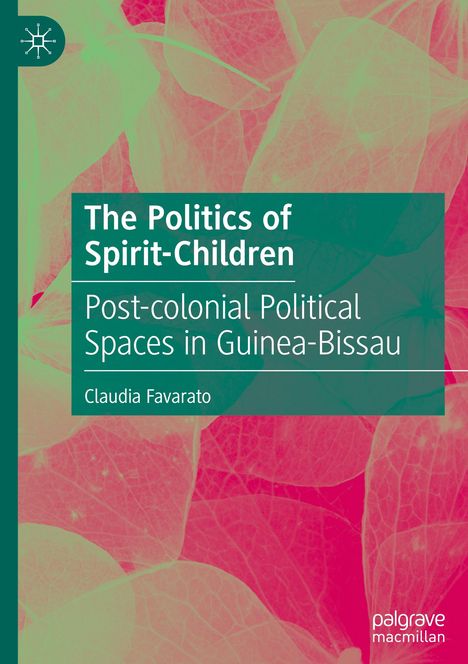
Claudia Favarato: The Politics of Spirit-Children, Gebunden
The Politics of Spirit-Children
- Post-colonial Political Spaces in Guinea-Bissau
(soweit verfügbar beim Lieferanten)
- Verlag:
- Springer, 05/2026
- Einband:
- Gebunden
- Sprache:
- Englisch
- ISBN-13:
- 9783032212023
- Artikelnummer:
- 12770526
- Umfang:
- 224 Seiten
- Gewicht:
- 406 g
- Maße:
- 216 x 153 mm
- Stärke:
- 17 mm
- Erscheinungstermin:
- 15.5.2026
- Hinweis
-
Achtung: Artikel ist nicht in deutscher Sprache!
Klappentext
This book examines the recurrent instability of GuineäBissau by shifting attention from party politics to the cultural frameworks that shape political ideas. It argues that locally embedded understandings---centered on the phenomenon of spiritchildren (criançäirân)---inform how the country's political community is imagined, who counts as a political actor, and how exclusion is normalized within the political order. The book challenges liberal assumptions about personhood, rationality, and citizenship, and advances an analysis of ontological pluralism in political life. The book positions the BissauGuinean state as an artifice in which formal institutional canons intersect with customary norms to produce a hybrid political space characteristic of postcolonial governance. This institutional--ideational mismatch helps explain recurrent unrest and governance fragility in GuineäBissau and resonates with dynamics in other West African and postcolonial contexts where state formation, belief systems, and political authority remain unevenly aligned.
Combining comparative political theory with African philosophy of the human, the book offers a decentered, decolonial account of power that prioritizes nonconventional practices as political affairs. It contributes to debates in African politics, political anthropology, political philosophy, and postcolonial studies on state--society relations, institutional hybridity, and the ontology of personhood. This book will be of interest to scholars and students concerned with governance in fragile states, the limits of liberal institutionalism, political ideas, and the role of cosmology, belief, and customary authority in contemporary African political orders.