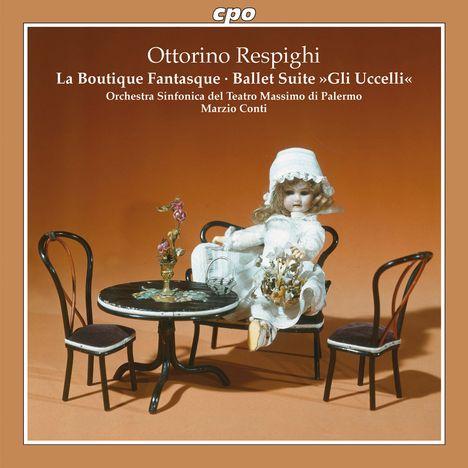
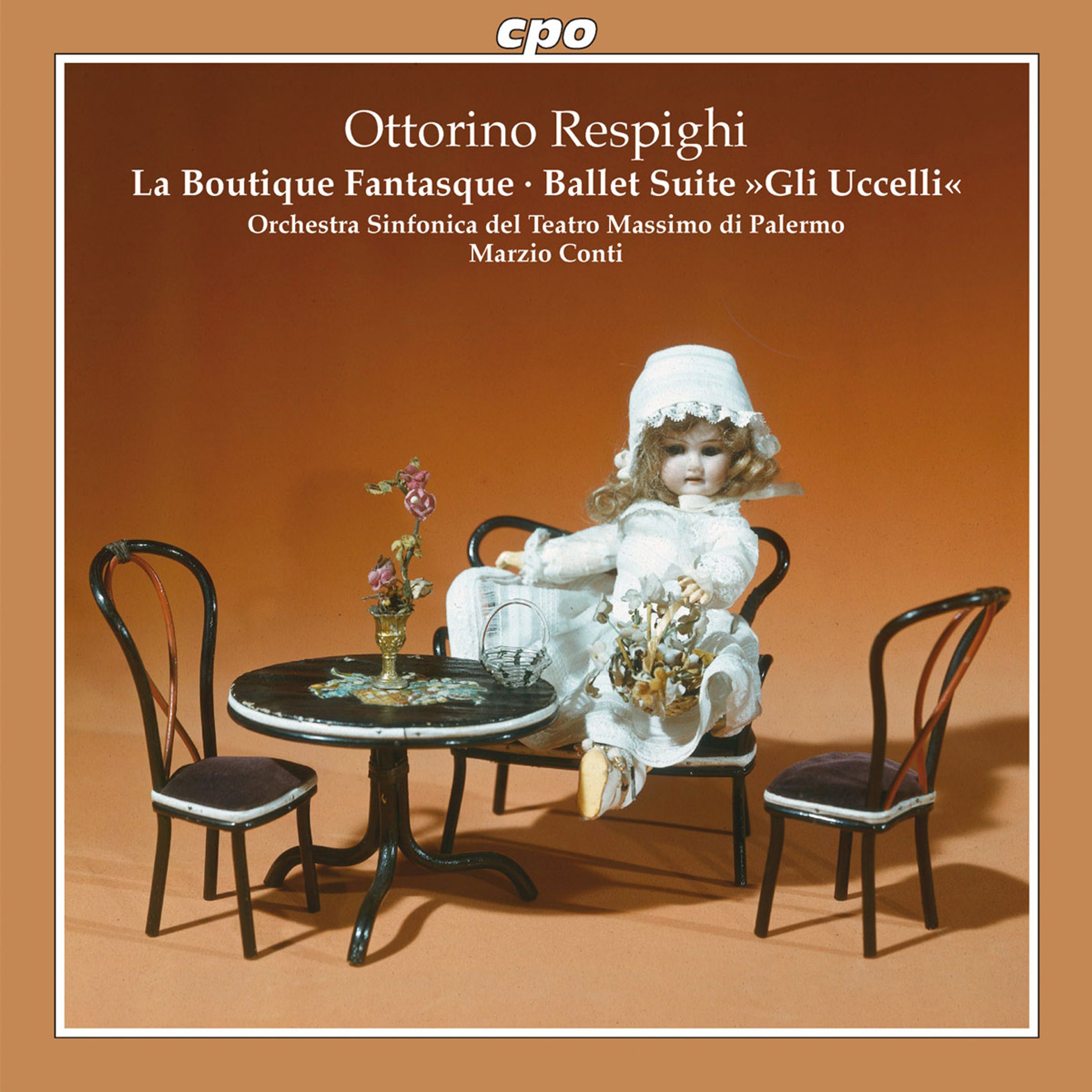
Ottorino Respighi: La Boutique fantasque - Ballett nach Rossini (Gesamtaufnahme) auf Super Audio CD
La Boutique fantasque - Ballett nach Rossini (Gesamtaufnahme)
Die SACD verwendet eine höhere digitale Auflösung als die Audio-CD und bietet außerdem die Möglichkeit, Mehrkanalton (Raumklang) zu speichern. Um die Musik in High-End-Qualität genießen zu können, wird ein spezieller SACD-Player benötigt. Dank Hybrid-Funktion sind die meisten in unserem Shop mit "SACD" gekennzeichneten Produkte auch auf herkömmlichen CD-Playern abspielbar. Dann allerdings unterscheidet sich der Sound nicht von einer normalen CD. Bei Abweichungen weisen wir gesondert darauf hin (Non-Hybrid).

Lassen Sie sich über unseren eCourier benachrichtigen, falls das Produkt bestellt werden kann.
+Suite "Gli Uccelli"
- Tonformat:
- stereo & multichannel (Hybrid)
- Künstler:
- Orchestra Sinfonica del Teatro Massimo di Palermo, Marzio Conti
- Label:
- CPO
- Aufnahmejahr ca.:
- 2007
- UPC/EAN:
- 0761203729524
- Erscheinungstermin:
- 23.8.2010
Online anhören






Ähnliche Artikel


Ein Bilderbogen in Surround
Der Umgang mit der Musikgeschichte und den Alten Meistern war Ottorino Respighi nicht nur höherer Zeitvertreib, sondern inspirierender Quell für das eigene Schaffen. So hat er 1927 aus diversen Cembalo- und Lautenminiaturen seine quasi ornithologische »Suite für kleines Orchester« namens Gli Uccelli geformt. Mit seinen pittoresken Momentaufnahmen zeigt er sich hier von der bewundernswerten Seite des sensitiven Beobachters, der in allem das Bildhafte entdeckt. Alle Stücke, aus denen das filigrane Bauer der Uccelli gefügt ist, wollen mit ihrer charakteristischen Einfärbung ganz einfach die verborgenen Stimmungen, wie er sie empfand, durch eine gewisse Instrumentalkosmetik erhöhen. 1919 hatte sich Respighi einige Rossini-Preziosen vorgenommen: Die Ballets Russes hatten bei ihm ein Puppenballett bestellt. Respighi wählte aus den späten Klavierstücken des Schwans von Pesaro, aber beschränkte sich nicht darauf, nur zu orchestrieren, sondern gruppierte, modulierte, organisierte, kürzte und instrumentierte, bis statt einer bloßen Suite ein folgerichtiger, in sich überzeugender Bilderbogen entstand.
Product Information
Of Dolls and Birds – in Surround
For Ottorino Respighi occupation with music history and the old masters was not only a noble pastime but also a source of inspiration for his own composition. In 1927 he formed what might be called an ornithological suite for small orchestra by the name of Gli Uccelli (The Birds) from various harpsichord and lute miniatures. With these picturesque snapshots he is shown to us from his remarkable side as a sensitive observer who saw the pictorial in everything. All the pieces contributing to the filigree birdcage of Gli Uccelli have a characteristic coloration and very simply serve the purpose of enhancing the hidden moods – as Respighi perceived them – with a certain instrumental cosmetics. In 1919 Respighi had turned to some Rossini gems, and the Ballets Russes had ordered a doll ballet from him. He made selections from the Swan of Pesaro's late piano compositions but did not limit himself to orchestrating them. He grouped, modulated, organized, abbreviated, and instrumented until the result was not a mere suite but a series of pictures with a compelling logic all of its own.
Rezensionen
Neue Presse 10/10: »Italienisch-leidenschaftlich bringt das Orchester des Teatro Massimo di Palermo die farbstarke Partitur, Dirigent Marzio Conti setzt auf knackige Tempi und bläserstarkes Temperament. Eine CD mit sorgfältig differenzierender Klangtechnik und abseits des Klassik-Mainstremas, die in jeder Sekunde Spaß macht.«Pizzicato 11/10: »Es ist also ein ebenso stimmungsvolles wie unterhaltsames Programm das Marzio Conti auf dieser CD dirigiert, und er tut das inspiriert, um den Witz wie auch den Charme der Musik hörbar werden zu lassen.«
American Record Guide 8/2011: »Eine wundervolle Platte!«
Disk 1 von 1 (SACD)
La boutique fantasque (Ballett)
-
1 Overture
-
2 Tarantella
-
3 Mazurka
-
4 Danse cosaque
-
5 Can can
-
6 Valse lente
-
7 Nocturne
-
8 Galop
-
9 Finale: Allegro brillante
Gli Uccelli (Die Vögel, Suite für kleines Orchester)
-
10 1. Preludio (nach Bernardo Pasquini)
-
11 2. La colomba (nach Jacques de Gallot)
-
12 3. La gallina (nach Jean Philippe Rameau)
-
13 4. L'Usignolo (nach anyonymem Meister, England 17. Jahrhundert)
-
14 5. Cucù (nach Bernardo Pasquini)
Mehr von Ottorino Respighi
-
Ottorino RespighiAntiche Danze ed Arie per LiutoSuper Audio CDVorheriger Preis EUR 18,99, reduziert um 0%Aktueller Preis: EUR 7,99
-
Ottorino RespighiMarie Victoire3 CDsVorheriger Preis EUR 29,99, reduziert um 0%Aktueller Preis: EUR 14,99
-
Ottorino RespighiMetamorphoseon Modi XIISuper Audio CDAktueller Preis: EUR 19,99
-
Ottorino RespighiTrittico BotticellianoSuper Audio CDVorheriger Preis EUR 19,99, reduziert um 0%Aktueller Preis: EUR 15,99